Jobs in Thailand – Teaching English

I don’t have a degree and I don’t have an overly impressive job history to wow anybody by any means. On top of that, I’ve never done a TEFL English teaching course.  I have been living in Thailand for over three months now – After my first month of living in Thailand I was fortunate enough to get a job as an Extra and earn a modest sum of money, it wasn’t much but every bit helped. Sadly, work only lasted about two months and since that time I have been struggling to acquire any more jobs in Thailand.

People had suggested teaching English in Thailand to me before but I never gave this a second thought because of my lack of higher education and experience. But desperate times pushed me to apply for a teaching job at the language school I happen to attend in Thailand – I had heard from a fellow student that students at our school have actually been considered for English teaching jobs in the past despite these shortcomings. So that’s when I decided to apply for the job anyway – it doesn’t hurt to try after all.


The Job Interview

I handed my CV in at the school and had a phone call the same afternoon inviting me to a job interview that week. I was so honoured and excited to have actually been considered for the teaching job there that I spent the whole of the next day looking for the perfect interview outfit to wear and after that, planning every key phrase ready in reply to any of his questions. Despite my background being different and maybe unconventional to many other desirable interviewees, I do actually feel relatively confident that I have a very diverse and interesting history behind me.

So after a whole day’s preparation making sure to look as anti-hippy and dashing as possible, I made my way to my job interview in Thailand. I arrived too early and so ended up taking a stroll to a bagel cafe nearby. Then I had a bright idea to get an Thai energy drink from the 7 11 to perk me up a bit for my job interview… Biggest mistake ever. I’ve always found myself to be pretty immune to caffeine in the past, but these bad boys in Thailand… they’re another story. I was waiting for my teaching job interview at the language school 20 minutes later and I felt myself feeling particularly energetic and chatty with whoever happened to be around me at the time. Come the job interview… I don’t know… maybe it was whatever the hell I drank mixed with nerves or something but all I remember is having the biggest grin ever stuck across my face, body twitching, eyes bulging and bullshit streaming out of my mouth at about 100 miles an hour. It went terribly.

I said absolutely nothing to benefit my cause, and yet I had so much planned to say. I was chattering useless rubbish at this poor man while eagerly staring at him and nodding insanely over-enthusiastically like a complete mentalist. I think it’s safe to say I did not get the English teaching job in Thailand. I do not know what is in the energy drinks in Thailand but that is some crazy drink.. just take it from me and avoid Thai energy drinks like the plague if you have an important teaching job interview in Thailand.

Total money made from teaching English in Thailand…

– 697 baht


Teaching jobs in Thailand tips

If you don’t have a degree or any experience teaching English, it is still possible to obtain work as an English teacher in Thailand. Thai state schools will still take on people without degrees and maybe if you are lucky, you may find private schools who will consider you also. You may need to ‘tweek’ your CV a little though… it is actually possible to purchase fake degree certificates on Khaosan Road too.

There are also various teaching agencies kicking around that can provide training as well as find suitable teaching jobs in Thailand for you, but they can charge steep fees and there are some untrustworthy ones around, so it is well worth thoroughly researching them before signing up to anything. One reputable company I have heard good stories about in Thailand is Essential Learning, or Ajarn is also a useful website to find teaching jobs in Thailand.

Other useful websites and agencies for finding teaching jobs in Thailand

www.teachingjobsthailand.net

www.myprivatetutor-thailand.com

www.teachingthailand.com

Time2Talk (credit to Eric!)

Super English

The Language

BFITS

Malthus


….Alternatively to teaching English in Thailand, Extra work requires no qualifications or experience.

Rumpuree Dance School – Pole Dance Classes In Bangkok

pole dance fitness classes bangkok

Rumpuree dance studio Bangkok

Rumpuree is a fitness and dance school in Bangkok with two branches, one situated in Silom and the other at the top of Amarin Plaza, BTS Chit Lom. Pole dancing is a lesson taught at Rumpuree among many others dance classes such as flamenco, hip hop, belly dance, salsa, zumba and, a favourite of mine that I would love to try at some point, swing dance. If you are looking for a pole dance class in Bangkok, choice is quite limited, your only other option being the ‘xxx pole dance’ lesson at some of the California WOW fitness centres. Dance classes at Rumpuree cost 500 baht for an hour or if purchased in 10 session blocks, 4000 baht.

The dance studio at Amarin Plaza is actually relatively small; there is a rather smart, wooden floored reception area complete with leather sofas, sweets and magazines to entertain yourself while waiting for classes. This opens into the changing area, of which there are three curtained booths with ample lockers to keep your belongings safe. The pole dance studio itself is quite cool – two of the walls are covered top to bottom with mirrors (very useful when trying to perfect moves) with another graffiti decorated wall to brighten it up nicely. There are four static poles altogether, with an extra separate pole at the front for demonstration.

Review

Despite there being a huge lacking of pole dance schools in Bangkok, there still don’t seem to be many students who attend classes here, meaning that the classes can be quite small and private. Generally at the times that I have been, pole dance class sizes have ranged from being just me on my own to about six people maximum. Some people might find this a little relieving and less intimidating to know when first starting out.

Also, the poles used in the studio are all static. In case you are new to pole dancing and unfamiliar with this pole dancing term – there are static poles and there are spinning poles, the static poles being harder to use and at times more painful on the skin due to friction. I find that the spin poles tend to just spoil you too much and impede improvement though. If you really want to get good at pole dancing, in my opinion using just the static poles is much better for you in the long run.

Now on to the pole dancing teacher. There are a few different teachers who teach the pole dance classes at Rumpuree but I have only ever had the pleasure of being taught by one of them. When it came to technique, she was very thorough and vigilante to point out any bad habits or mistakes.  Pole dance moves were broken up into detailed and specific steps – this is definitely the important to learn many complicated moves pole dancing, however sometimes I found very simple moves could be a little over-complicated by this overthinking and also… less fun. Personally, I generally perform better by just watching and copying without thinking about something too much. And I enjoy it much more too; but then hey I do have really bad pole dance technique apparently.

Most importantly of all for me though, I found the atmosphere at Rumpuree dance studio in Bangkok to be a little cold and unfriendly with no sense of community. The other dance students were very distant, most days nobody speaking a word to eachother throughout the whole of the pole dance lessons. I don’t know if this is just unfortunate and down to those individual people, or if it’s because of the style of teaching not pulling people together and opening them up to eachother. At the pole dance school I went to at home, the teachers tended to encourage students to share poles and spot eachother, making the whole vibe of the pole dance classes much more close-knit and relaxed. I think it’s really important to have a social side; a close, friendly community when taking part in activities like this.


Pros

+ The teacher(s) is very good – particularly observant in reinforcing good technique and habit

+ At 500 baht per lesson, although I think the price is a little steep even for Bangkok, the classes can be very small, meaning more attention and help per student.


Cons

Lessons tend to neglect fundamental strength and grip conditioning – crucial in buiding a good foundation for advanced pole dance moves

 Not very sociable and not as fun or varied as pole dancing has the potential to be


Saxophone Pub Bangkok

The Saxophone is a pub/ restaurant specialising in good music and good food, located at the Victory Monument, Phayathai, Bangkok. If you love live music, especially jazz & blues, Saxophone pub is a definite must on your to-do list in Bangkok. The relaxed and chilled out atmosphere combined with the cozy surroundings and awesome music, make thie Saxophone Pub just perfect to hang loose with a good beer or two in Bangkok. Last I visited, there was a cover band playing old school jazz tunes such as covers of Dean Martin and Frank Sinatra to the more constrasting music of Amy Whinehouse, Adele and Wild Cherry.

The style of the Saxophone pub itself is very reminiscent of an old, dimly lit, English style pub, with an array of kooky decorations and paintings filling any possible remaining bareness, and breathing yet more character into the spririted and cheery Bangkok bar. You can purchase cooked food at the Saxophone Pub, typically costing from around 120 baht to 300 baht for a meal. The pub menu offers a selection of dishes including Thai food, curries, salads, steaks, sandwiches and even german cuisine.

The portions are not always so generous but nonetheless the food is very delicious. Soft drinks are expensive, costing from 90 baht upwards, making it more worthwhile to order alcohol instead. Beers cost from 120 baht and cocktails from 180 baht – the selection of cocktails is huge.

How to get to get to the Saxophone Pub in Bangkok

Take the BTS to the Victory Monument station and then head towards the Victory Monument itself from there. Just before you get to the large roundabout you will notice a small road veering to the right from the main road. With it’s many lights and smoking patrons hanging in the doorway outside, the Saxophone Pub stands out enough to notice it from the main road if you look for it anyway.

Sunrise Tacos, Mexican Cuisine In Bangkok

Where to go for Mexican food in Bangkok?

Sunrise Tacos is a colourful new restaurant located in Bangkok’s Silom area, specialising in Mexican cuisine. You can find Sunrise Tacos close to the BTS Sala daeng station by following signs to CP tower, then heading towards Chong Nonsi along Silom Road from here (silom soi 4). Outside, the Mexican restaurant draws in passers-by with it’s quaint outdoor sitting area of brightly decorated tables, cushioned chairs, lanterns and imitation turf. A meal at the Bangkok Sunrise Tacos typically cost between 150 and 400 baht.

Here, the portions are quite substantial and filling and they serve fajitas, grilled meats, nachos as well as some very delicious looking cakes. However the great thing about the nachos at Sunrise Tacos, is that they have a whole selection of dips to choose from from the large and impressive dip counter that extends throughout the middle of the restaurant.

A basket of nachos and dips at Sunrist Tacos costs 59 baht. I opted for the healthy choice of grilled salsa chicken with mediterranean vegetables and mexican style rice priced at 195 baht. The chicken was perfect in texture; slightly crispy but moist on the inside, subtly flavoured from the spicy salsa. The chicken fajita was also full of flavour and just the right consistency and crispiness.

The staff at Sunrise Taco are not particularly cheerful or friendly but they are still very attentive and quick. I didn’t have any dessert as the rest of the food filled me up enough, but that looked pretty damn good as well. All in all, for two of us to dine at Sunrise Taco in Silom, Bangkok, it cost a total of 660 baht.

Some people may find the garish, brightly coloured sign off putting when passing, but if you’re a fan of Mexican food, do not let this sway you. The food is very good, well cooked and not greasy, with plenty of choice. And it is quite pleasant to sit in the outside ‘garden’ to do some people watching on the busy and energetic Bangkok road of Silom.

You can find another Bangkok branch of Sunrise Tacos in Asoke as well, just across the main Sukhumvit road from Terminal 21. It’s very close to the Asoke BTS station in Bangkok. Asoke Sunrise Tacos has large beer gardens set back just off the main road.

Money In Thailand

Cost of living in Thailand

How much the cost of living in Thailand will be for anybody depends on the things in life that are most important to that individual person. For example, I spend the majority of my money in Thailand on sports and exercise, and then on the extra food to supplement this. I live in the centre of Bangkok and I don’t eat street food for every meal, I treat myself more than a couple of times a week to some variation of good food in a cafe or restaurant. I like to spend money in Thailand travelling, exploring and I also like to buy clothes, but on top of this, for some reason I feel drawn like a magnet whenever I go in a Boots or Watsons, I just want to spend my money on everything. What is it with women and pharmacies anyway?

Beer isn’t that cheap in bars and pubs; just as an idea, the cost of a beer in Thailand such as Chang and Singha is around 100 baht a pint (£2 or $3), but you can also buy a bottle of Thai whisky like Sangsom for about 290 baht (£6 or $9); just half of one of these will easily do for me. Beers like Guinness or Hoegaarden will cost from around 250 baht a pint (£5 0r $7).

Anyway this month, my cost of living in Bangkok totalled 24000 baht (£530 or $800). I also made 5000 baht (£100 or $150) from extra work, I didn’t earn much money from work at all this month – I worked about 3 days altogether… my movie career in Thailand seems to be dying a slow death after it has only just begun. Sad times.

Anyway, from what I’ve googled and seen online, a great deal of people seem to say you can’t live on this low amount of money in Thailand, especially Bangkok, but I guess I have proof otherwise. Although I eat out a lot and spend more money in Thailand than I really need to, I just don’t think anyone could live much cheaper than this anyway; everybody has their vices in life. To have an even lower cost of living in Thailand, you would have to live frugally and not have much of a life I think. But of course the cost of living is much cheaper outside of Bangkok.

*Update: Please note that I have since managed reduce my cost of living in Bangkok to around 18000 baht per month (£400 or $600) simply by not going shopping and by eating mostly street food. You can read more about eating on a budget here.


Cost of food in Thailand for one month: 7900 baht (£175 or $260)

Most days for lunch I will eat Thai street food, either to takeaway or sit in, at 30 – 35 baht ($1) for a meal. It’s actually pretty good too. On evenings, mainly out of convenience and laziness, I will often eat at our apartment restaurant or the restaurant next door for around 50 – 90 baht per meal. A couple of times a week or more, we tend to cave and spend money at more expensive, maybe western style restaurants for up to 350 baht (£8 or $12) each.

Most days I will also spend money on extra snacks such as chopped fruit bags, meat sticks, dumplings, steamed buns, fried chicken, soy milk and the odd bubble milk tea; all of which cost from 10 baht per serving. 1150 baht of my spendings this month was used at 7 11s and Top supermarkets mainly on toilet roll, cereal, milk and bread. Cereal is a luxury in Thailand, one box can cost up to 300 baht… Furthermore, water in Thailand is pretty much negligible as you can buy it purified from Reverse Osmosis machines for 1 baht per litre.

Bubble milk drinks from a street vendor

Cost of transport in Thailand for one month: 2738 baht (£60 or $90)

I spend money on the Bangkok BTS sky train on a daily basis. 900 baht (£20 or $30) of this total was spent on the MRT subway, the ferry and topping up my BTS carrot card. I spent 600 baht on taxis, mainly to get to work in Bangkok in the unsociable, early hours of the morning or basically whenever other times the BTS is closed at night. Getting around Bangkok city in a taxi shouldn’t cost any more than 200 baht a journey – taxis in Bangkok for me usually average around 100 baht per ride.  A typical journey on the BTS can cost between 15 baht and 50 baht per journey depending on the distance (the MRT underground is also very similar in price). The ferry usually only costs 15 baht. I spent another 900 baht on a 460 km return train and bus journey when making a trip up north. The remaining 300 baht went on two days of moped rental (after splitting between the two of us).


Cost of rent & bills in Thailand for one month: 5500 baht, split between two (£120 or $180)

We pay 10,000 baht for a 40 sqm studio apartment which is situated 10 minutes walking distance from a BTS station in Bangkok. If you live alone, you can find a basic, smaller studio apartment from 4000 baht; for a couple you can find slightly bigger apartments from 8000 baht. It will obviously cost more money the closer you live to the centre or subway/ skytrain in Bangkok. You can find more information in my article renting in Bangkok.


Cost of clothing in Thailand for one month: 4000 baht (£90 or $130)

With this money, I practically bought about 8 new outfits from Platinum Mall and Siam for 1050 baht, at Boots and Watsons I spent about 900 baht (what the hell I spent that on other than sun cream I do not remember! Shameful), 200 baht on phone topup and 1300 baht on a ukulele. Anyway, for more information on average costs of clothing and souvenirs in Thailand you can check the prices here.


Total spent on recreation in Thailand for one month: 3400 baht (£75 or $115)

This includes 600 baht spent on booze, 2000 baht on hotels and 750 baht on a cycle tour (you can see more details on this by clicking here)


Cost of gyms and fitness classes in Thailand for one month: 1000 baht (£20 or $30)

This covers two pole dance classes costing 500 baht per class. I am also a member of a gym in Bangkok but paid for this upfront for 6 months. Technically, this would work out to cost about 2000 baht per month as well.


For more information on the cost of living and money in Thailand, you can check out more on my expenses here: Month 1 and Month 2


Clark Hatch Thaniya – A Review

clark hatch review bangkok

Before coming to Thailand we did a little research online regarding good gyms in Bangkok, most of what we found was actually quite off-putting however since coming to Thailand we’ve found a few good gyms so do not be put off if you are having trouble research online before moving.

Back in January 2013 we posted an article listing gym locations and prices in Bangkok as a guide to help people find a gym in Bangkok that best suited their requirement, be it weight training, getting fit, fitness classes and so forth. At the time we had not yet joined a gym, since writing that post we have joined Clark Hatch Thaniya, which is in Sala Daeng, Bangkok and here is our review of the place.

The Gym Equipment at Clark Hatch Thaniya

The equipment in Clark Hatch is all pretty good. There are plenty of treadmills, bikes and cross trainers, assisted weight machines as well as a generous free weight section that is home to two large racks of dumb bells ranging from 5lb through to 70lb. There is also a smaller rack of dumb bells ranging from 1kg to 10 kg.

The weights room also has every bar you will ever need, long bar, short bar, Z bar … you will also find some great frames to help you deadlift, squat and chest press.

Benches; also lots, I’ve never had to weight for a bench to become free. That being said, there are no good angled benches – They do have a type of bench that angles however its not flexible enough – I struggle to get a good angle for dumb bell chest presses without moving more of the weight than I would like to my shoulders.

Only downside to the gym area is that there is no air conditioning, just fans. For weight training, the fans seem to be just about right though for cardio the lack of air conditioning really makes it harder. Clark Hatch is not the cheapest gym in Bangkok, air con doesn’t seem much to ask.

The Swimming Pool at Clark Hatch Thaniya

This is a real bonus. Clark Hatch have a restaurant on the pool side and sitting by the pool at the end of my work out, drinking a protein shake makes training at Clark Hatch a really enjoyable experience.

The swimming pool is big enough to exercise and has a pleasant decking area for snoozing. I’ve never really seen the pool with more than 1, maximum 2 people in, which is great.

The restaurant has a range of Thai dishes for a reasonable price. Protein shakes will cost you 100 Baht, which may seem a little high however protein in Thailand still seems like a sellers market. Also, back in England I’ve never had a protein shake anywhere near as tasty as these’s bad boys at Clark Hatch.

Does it Get Busy as Clark Hatch Thaniya?

We tend to go in the week and weekends anywhere between 12:00 and 16:00 and it’s never really busy. I believe it gets a little busier in the evenings as most gyms do.

The Boxing Gym and Clark Hatch Thaniya

On the floor below the main gym is Clark Hatch boxing gym. It spans the whole of the gym area and has bags, pads and other gear. You are free to use the boxing gym alone when classes are not happening or you can join the Thai Boxing class at Clark Hatch for free. In fact, there are a heap of classes at Clark Hatch such as Yoga, Fitball and so forth. They are all free for members.

The Facilities at Clark Hatch  Thaniya

The changing rooms and showers are good. Enough room, spacious lockers (bring your own pad lock) and the showers kept clean and offer complimentary shampoo and shower gel.

There is also a Steam Room. The steam room in the male changing room is in serious need of restoration. Big gaps under the door mean it gets cold quickly and when the steam clears, you can see the walls are cracked and stained yellow. The lights do not work that well if at all. Either because the mold and rust has won or the bulbs are gone, either way – The steam room seriously needs attention. That being said, I use the steam room around three times a week, I’m just not that fussy.

Free Gym Clothes!

Now this is a really nice plus. I’ve never seen a gym do this before. Each time you come you are offered optional free gym clothes.. shorts, shirt or vest and shocks (Towel as well, of course).  At first I thought this was a bit of an odd concept, but not having to carry dirty clothes around with you is great. You can come to the gym with nothing but your member ship card, work out, have a steam, have a shower and walk out in fresh clothes. Cool. (Some of their gym clothes could be chucked out now though I think, some are super new and others are super old).

Friendly, Helpful Staff

The staff here are very friendly and welcoming and will help without hesitation if you need it. Many of the staff can provide personal training too, though I’ve not taken this up so I’m unable to pass comment.

How Much does Clark Hatch Thaniya Cost?

You can pay daily (500 bath), monthly (3500 baht), every 6 months (12,500 baht) or annually (21,600 baht). We did not haggle but I bet you could trim a little off, if you were that way inclined.

Click here to see our post on prices of other Gyms in Bangkok.

Pros

Loads of gear, not overly busy, friendly staff and customers, great roof top swimming pool.

Cons

No air con in the gym, steam room is gross.

The Verdict

I love this place and am going to seriously miss it when I leave Thailand. I look forward to going to the gym thanks to this place, which is half of the battle.


Thaipod 101 Review


Thaipod 101 consists of a range of conversation lessons in varying difficulties, video lessons and a dictionary of the 100 most used Thai words (or many more depending on the package you purchase). The conversation lessons run for roughly 10 minutes in length, they will play a conversation first at normal speed, then slowed down and lastly alongside the english translation. After playing the conversation three times at the beginning, the two Thaipod 101 hosts then go on to talk about interesting facts about the culture and go into more detail about the content of the conversation. This breaks up the Thai lesson quite nicely and gives it a little more of an informal feel.

There are some other smart learning tools with Thaipod 101, for example tagging any words that you might be having difficulty with and then using them as flash cards. They also have PDFs you can download to supplement the lessons. The basic package costs around $8 for one month (N.B the longer you sign up for, the cheaper it gets) and you can sign up for a free 7 day trial to see if you like it first.

Thaipod 101 Review


The downside

I did find that the hosts on Thaipod101 spoke quite unnecessarily quickly – in the beginner lessons they spoke a little fast for someone new to the language but don’t even get me started on the intermediate lessons! Way too fast and mumbly… I always used to think they must just be warming us up because Thai people in real life must speak super fast. Well no, actually they don’t! A lot of Thai people speak really quite clearly, so it is completely unnecessary!

But while I’m on the subject of the Intermediate lessons… I really did not enjoy these lessons. They replaced one of the hosts, Ryan, with a new guy who just had absolutely no character, or life in him for that matter, whatsoever. I really don’t mean to be personal, but his voice was just so tired and mind-numbing… it sounded like he did not want to be there doing his job, he just sounded depressed. Not particularly stimulating when you’re trying to learn a language from this voice. Apart from the dreary tone of these intermediate lessons, I found them to be a little useless in content. Maybe not so much grammar wise, but as for the vocabulary – it was all a little too specific and useless for everyday conversation. It would have been much better to be learning more commonly used words instead.

Another problem I found with Thaipod 101 was that they tended to gloss over and neglect some of the grammatical abnormalities in conversations which sometimes left me a little confused. I think this is a common problem with most Thai learning resources though, Thai is a complex language, full of abnormalities. I guess they were just focusing on the main grammar points of that lesson though, and they did explain and break down those points quite lucidly. I used to be a member of Japanesepod 101 and found these lessons to be much more interesting. I think Thaipod 101 just needs some stronger characters to host it, some more enthusiastic acting and more interesting conversations like they had in Japanesepod 101.


Pros

I enjoyed the Absolute beginner and the Beginner lessons and found them to be particularly helpful for extra listening practice. They were all set in everyday settings applicable in most tourist and expat situations, so were full of useful phrases and vocabulary. It’s nice to have the lessons broken up by the chit chat of the hosts as well, it makes it all a little bit easier to take in, more enjoyable to listen to and not so daunting. The downloadable PDF also summarised some of the rules and points covered in lessons very concisely and straightforward, making them easy to look back on at a later date and review.

The learning tools such as the Flash cards are also quite useful, particularly for those who maybe aren’t so organised and co-ordinated with their studies. The dictionary is great for improving your vocabulary as it comes with pictures, thai script and recordings and example sentences to help you learn. I have heard a lot of people confused and wondering if Innovative Learning (aka pod 101 series) is some sort of scam because they have a tendency to send a lot of emails and the prices quoted on the front page can be misleading. In all fairness it does seem a little bit dodgy! But I have found them to be a very honest and trustworthy company, for example when I forgot to cancel my yearly membership they were very understanding and refunded my money for me.

Membership is so cheap for Thaipod 101 and for the price, it is very good listening practise to supplement any other studies, not to mention some of the useful phrases covered. Personally, I think listening practise is vital to improving in a language, it helps reinforce what you have learnt and train you ears to recognize the sounds and words. The downfall of learning from books, is that you aren’t associating words with the way they actually sound. Give it a try, for $8 you’ve got nothing to lose!

Protein In Thailand


Bodybuilding in Thailand

For some people, bodybuilding may be regarded as a high priority in their daily lives and hence may be a concern when moving to a different and unfamiliar country like Thailand. There is more to keeping in shape and developing your body to just working out – diet is equally important. For more rigorous exercise like bodybuilding, you need a lot of protein and sometimes it’s not possible, or particularly healthy, to get this from food alone.

Unfortunately, protein in Thailand is expensive. On average you will find 1kg of protein powder to cost around 2000 baht (£40) in Thailand. You’ll get roughly 20 servings out of this. Milk in Thailand costs about 80 baht (£1.60) for a 2 litres carton of milk. So I’d say it works out to about 70-80 baht to make your own protein shake in Thailand. At a typical Thai gym, you can purchase a protein shake at the cafe for around 100 baht.

You can buy protein powders and protein bars (bars from 120 – 170 baht each or £2.40 – £3.50) from most pharmacies and Boots shops in Thailand, although none of the brands of protein are particularly high quality ones like the ones you can get in other countries. However, in Bangkok, the best place I have found so far for protein supplements and similar bodybuilding supplies is located in Silom.

Where to buy protein in Bangkok

Head west down Surawong Road from the Rama IV intersection near Sala Deng BTS. Pass the ‘Japanese street’ – Thaniya Soi 2 and you will find a local pharmacy called DD Pharmacy on the left hand side with a range of whey protein and body building supplements in the window. I have found this to be the best source of whey protein for bodybuilding in Thailand.

Meaty foods 🙂

High protein foods in Thailand

Protein shakes may be expensive in Thailand but there are still plenty of economical and natural sources of protein in Bangkok. There is plenty of street meat available, although some of the meat may not be particularly healthy. You’ll find a great deal of deep fried chicken and unidentifiable meatballs on skewers, which, although surprisingly tasty, is mostly heavily processed (and, according to recent news, possibly made from Soi dog meat). Moo Ping (barbecued pork on skewers) is a tasty source of protein but very fatty.

You can still find many street vendors in Thailand barbecuing some healthier pieces of chicken or fish though. The barbecued meat is really tasty and, as far as I know, maybe the healthiest option for street meat. Barbecued chicken typically costs from around 30 baht, depending on the size of it, and grilled fish will cost from around 80 baht, again depending on the size.

Meatball skewers generally cost 10 baht per stick and come with a dollop of chilli sauce in a bag. You can buy deep fried chicken with a bag of sticky rice and chilli sauce for about 35 or 40 baht (or on its own for around 25 baht – thats 50 pence or 70 cents), but it’s probably a little bit fatty and greasy for some bodybuilders. Assuming most expats bodybuilding in Thailand are reasonably health conscious anyway.

7 11s are abundant in soy milk drinks to give you a protein boost. I have found the red cartons called ‘Vitamilk Big’ to be the best ones; the least sugar and 10 grams of protein per carton. These cost 10 baht each. What with 7 11s existing practically every 300 metres apart in Thailand, chances are there will be one outside wherever you workout – buy three of these fuckers and you’ve got your post workout 30g protein intake. Bam.


If you’re interested in checking out the gyms in Bangkok as well, take a look at my Gym Directory here.


Bangkok To Sukhothai

what to do in thailand

Thailand is a huge country full of so many choices of what to do and where to visit. To help guide people on where to travel and what to do in Thailand, I will be starting a mini series of tried and tested mini trips in Thailand. When it comes to organising holidays in Thailand I am ridiculously meticulous and spend a stupidly long time planning the best places to go, what to do and researching the best value hotels with the top reviews.

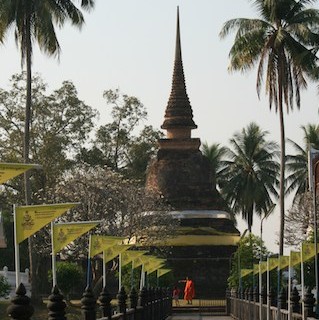
sukhothai historical park

Ruins at National Historical Park, Sukhthai

Two nights in Sukhothai

How to get to Sukhothai

Day 1: Catch the train (terminating in Chiang mai) from Bangkok Hualumpong station to Phitsanulok. For some reason you can not book the train online anymore, but tickets can easily be purchased on arrival at the train station. Check out www.railway.co.th for an up to date timetable.

N.B:  A 2nd class train ticket to Phitsanulok including aircon on the DRC train will cost around 490 baht. This train leaves at 8.30 and takes 5hrs + meal and snacks included – It’s clean, comfortable and quick with a western toilet

A 2nd class train ticket with fan only on the Rapid train will cost around 289 baht – This train does not include a meal and has a squat toilet instead (Quite the challenge on a bumping and jerking train). This train is also slower, taking around 7 hours. It is fine when travelling during the daytime, but it does become a bit of a bug fest at night time with all the windows open (not to mention a tad grubby).

A 3rd class train ticket costs from around 69 baht- it’s not particularly comfortable so I would not recommend this for journeys over an hour long. 

Catch the bus from Phitsanulok bus terminal to travel to Sukhothai – the ticket kiosks are clearly marked and the staff are very helpful in pointing you in the right direction. A bus ticket costs 43 baht and the journey to Sukhothai is just over an hour long. There are tuk tuks and buses outside of Phitsanulok train station which can take you to the Pitsanulok bus terminal located about 5 minutes away – the tuk tuks tend to charge around 60 baht for this.

Where to stay in Sukhothai

For people on a low budget, check in at TR Guesthouse in Sukhothai for around 300 baht per night. If you have time to spare, a trip to the main Sukhothai market is advised where you can buy some extremely cheap clothing and shoes or tuck into some of the local Sukhothai  food. Also make sure to visit the Chopper Bar in Sukhothai, a few doors up from TR Guesthouse; a biker style bar where they have an awesome local musician to play american/ country infused Thai folk music every night.

Sukhothai historical park

After exploring Sukhothai town, on day 2 visit the Sukhothai historical Park – Hire a moped from 200 baht and cruise around the historical park ruins with a prepared picnic. Alternatively, catch the songthaew to the old city, and then rent a bicycle to cycle around Sukhothai historical park. It’s best to head out early in the morning or later in the afternoon/ evening to avoid the heat and the crowds. The Sukhothai historical ruins are absolutely huge, but in my opinion, 4 or 5 hours will suffice. Entry to each of the sections of Sukhothai historical park costs around 100 baht each.

sukhothai

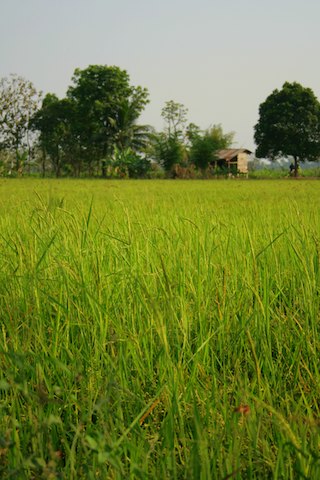
Sukhothai countryside

Book a tour with Cycle Sukhothai

As well as Sukhothai historical park tours, Cycle Sukhothai also do countryside, sunset and Karma & Darma tours which are all a little more off the beaten track and show you a side of Sukhothai that you will unlikely experience as a tourist otherwise. In my opinion, touring the Sukhothai historical park is something you can easily do alone without a guide though. Cycle tours can cost from 350 baht – Check out www.cycling-sukhothai.com

Day 3: Take a taxi to the Sukhothai bus terminal for 60 baht and catch a bus back (they come roughly every hour) to Pitsanulok.

Optional Phitsanulok detour for nature lovers!

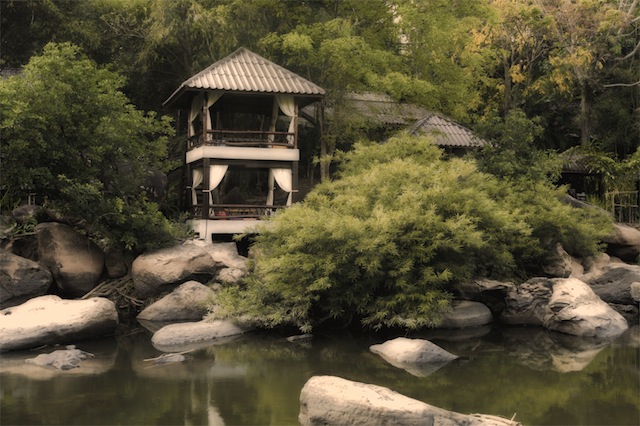
The charming Rainforest Resort, Phitsanulok

*Phitsanulok and Sukhothai are actually situated along the main route to Chiang Mai, so if you have not been before, it is a good idea to continue on the same train and make a visit to Chiang mai too.

The town of Phitsanulok itself, is a little lacking in things to do on it’s own. But if you hire a car or don’t mind catching the bus around, there are plenty of national parks and waterfalls to explore and experience the Phitsanulok rainforest, although they are fairly spread out.

  • Take a bus from Phitsanulok bus terminal to the highly recommended Rainforest Resort for 25 baht. This place is situated, if you can’t guess, in the rainforest area about 35km outside of Phitsanulok town and off the beaten track. Make sure to write the Thai address down and mention Khaeng song water fall (pronounced nam dtok gaeng song) so that you can catch the correct bus. It is a 5 minute walk back towards Phitsanulok from this waterfall. 1 night in a bungalow will cost from around 2000 baht.
  • The rainforest resort offers kayaking and white water rafting activities. You can also easily check out the nearby Khaeng Song waterfall where the Phitsanulok locals spend their days off for picnics and swims in the river.

A bungalow at Rainforest Resort

Road trippin’ Phitsanulok and Sukhothai. You can check here for more ideas of what to do in Thailand.

Extra Work In Thailand

jobs in thailand

 Jobs for foreigners in Thailand

One day in our first month living in Thailand, we met up with an acquaintance of of my boyfriend’s, who invited us out for some drinks on Facebook. The next time we met up with him I mentioned that I needed work while living in Thailand and couldn’t find any suitable jobs for foreigners. At this point he suggested I do modelling or Extra work in Thailand and that he could hook me up with a friend of his who did this… In my experience, people tend to make a lot of empty offers but never really pull through with their promises, so I didn’t think anything would come of this Extra work in Thailand and took it with a pinch of salt.

Well, to my surprise the next day, I got a message from this friend, giving me the friend of a friend’s details and telling me to email her for advice. I was taken a little off guard and to be honest, absolutely hated the idea of contacting a complete stranger for help and job advice… it kind of made me cringe. But… this friend of mine who I had only met twice now, was kind enough to try and help me find work and I was really grateful. So, I had to contact this person for his sake. And I did. Long story short, I met up with this girl who turned out to be most awesome – she hooked me up with her agent and I had a job as an Extra in a Bollywood movie in Bangkok the next day after meeting her.


Extra work in Thailand

Extra work in Thailand can differ greatly from job to job, so if you like a little variation in your work then it can be a more interesting option than teaching English or working within a company in an office. Some Extra jobs can start at 4am in the morning, some can start a 2pm in the afternoon. Sometimes you will finish after 4 hours and other times you could end up working 18 hours with overtime. You could be expected to dance and celebrate at a nightclub or merely sit doing nothing in the background.

Quite often, you will be expected to literally just walk backwards and forwards over and over again. You may be taken to grand mansions set 100 miles out of Bangkok or maybe just work in an abandoned warehouse in the centre. Sometimes you get time to snooze in the sun, sometimes they really get there money’s worth out of you, barely giving you time to eat and repeating over 30 takes of the same scene. There are nice directors in Thailand and there are bad ones that don’t treat you so well.

The only downside of extra work in Bangkok is that it is freelance, so your pay will vary depending on how much work you can find. It can be good fun though, and you get to meet so many interesting people. I also still find it intriguing now to see the adverts and movies from a perspective behind the scenes, although I never actually know the names to be able to look up the finished result.

Anyway, for a standard 12 hour long work day in Thailand, you can get paid from 1500 baht (£30 or $50). It seems low at first but you do need to remember that the minimum wage in Thailand is only 300 baht for a 12 hour day, so it really helps to keep this in mind before you start getting too greedy! However saying that, if you are really lucky, you might find an extra job in Thailand that pays 3000 baht (£60 or $100), or if you get a few lines you can even earn from 4000 baht upwards.

Many people I have met, got involved in Extra work the same way as me – through word of mouth. So sometimes it really pays to be a Yes man! Life and work in Bangkok all seems to be about word of mouth, unlike in the West, you just don’t seem to find everything in adverts in papers or on google in Thailand.


Extra work in Thailand tips

Here are some casting agencies in Bangkok that I have researched and been recommended. If you are in need of work in Bangkok, then it is worth a try sending some photos and your profile through these websites and asking for extra work:


www.modelingbyus.com

www.coolmodeling.net

www.starlighttalents.com

www.tigercasting.co

Facebook: Wattnott Talent

Facebook: Orange Talent agency

Facebook: Banana Casting


Extra work is ideal for foreigners in Thailand and you don’t need to worry about a work permit. You do not need to concern yourself too much with having professional shots to send to agencies – I only have rubbishy pictures myself – but it would help if you happen to have some to hand. But the first step when starting work as an extra in Thailand is getting your foot in the door. It helps immensely if you have contacts but this is just down to luck… If you can just get one agent interested in you, it will be much easier to find work in Thailand from then on out.

After I stopped getting work with my first agent in Bangkok, I sent my details and photos to some other agencies and never heard anything back from any of them. A couple of months later in Thailand though, I had a random phone call from an agency I had never even heard of before, offering me work. I can only assume my previous agent had maybe passed my details on, I really have no idea. At this particular job that they gave me, I met an agent from yet another different company who gave me his business card – this was actually one of the agencies I had applied to and not heard back from. So it really helps to meet people personally on the set in Thailand when you have the opportunity.