Averages Costs In Thailand

How much does an average holiday cost in Thailand? Food, drink and shopping is all very cheap in Thailand so you don’t need to worry about breaking the bank while enjoying your travels…

You tend to get much better value for money in mainland cities such as Chiang Mai, Kanchanaburi or Bangkok, than you do at beach resorts. The Thai islands are particularly expensive – I’ve found that, although you may pay double the price for a restaurant meal on an island as you do on the mainland, the food is usually not so good quality either. Anyway:

How much does food cost in Thailand?

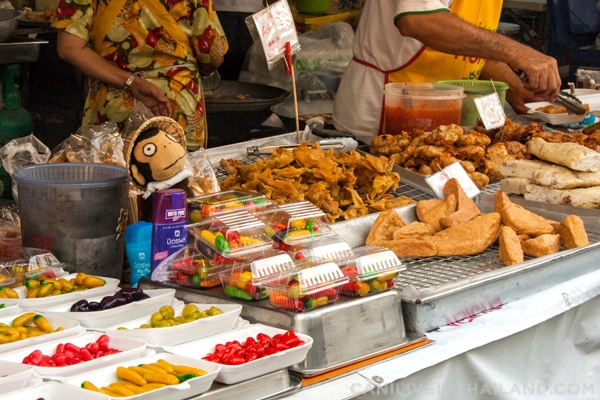
If eating locally at the street stalls, you can buy a meal from just 25 baht – that’s well under $1 or 50p. If you are travelling on a budget, or just want to sample some authentic, local Thai food, then street food is a must.

However, if you’re staying in tourist areas and eating near popular sightseeing attractions, expect costs to be a little higher (but still super cheap!). A standard meal in a restaurant in Thailand will cost between 100 baht and 350 baht on average – this works out to about $3 to $10.

As a general rule of thumb, usually, if you’re spending 250 baht or more for a meal, it should be a pretty nice place. When on holiday, eating out at the nicer establishments is very affordable and easily within the average person’s budget.

How much does a beer cost in Thailand?

At a cheap and casual bar, beers can cost from 60 baht (£1.50 or $2.50) for a large bottle of Tiger, Chang or Singha beer. A drink at one of the western style pubs in the city will cost up to 250 for a pint of Guiness or a bottle of cider like Magners. Cocktails tend to start from around 150 or 200 baht. Cheaper clubs and bars may sell cocktail buckets for around 300 baht.

How much does a T-shirt cost in Thailand?

You can get some really cheap clothing and shoes in the markets of Thailand. T-shirts typically cost around 200 baht, flip flops from 40 baht, women’s denim shorts from 80 baht and sarongs for around 100 baht. 

How much does an average hotel cost in Thailand?

There are some nice, modern and clean hostels in Thailand available from 200 baht a night in most areas. In Bangkok, Khaosan Road is home to many of the more cheaper, backpacker hotels. While you’re staying in a country with such a low cost of living though, you might want to make the most of it and upgrade to a more luxurious hotel. From only 1500 baht ($45) per room, you can find some amazing hotels. For a guide on where to stay and the top hotels for different budgets, check my Bangkok guide here.


To avoid getting ripped off by greedy stallholders, I recommend checking my shopping price guide and street food guide for more prices before you go. You might also want to check out a more detailed account of the costs of living in Thailand here.

Top 5 Cafes In Bangkok

Bangkok is absolutely jampacked full of unique and refreshing cafes, there are loads to choose from. Whether you just fancy some hella tasty cake or a comfortable hangout to chat with friends, there are loads of cafes in Bangkok for just about all tastes.

My top 5 best cafes in Bangkok:

1

Mr Jones’ Teddy Bear Orphanage is perhaps one of the most charming and quirky cafes of all in Bangkok. As far as I know, there are two different branches of Mr Jones’s teddy bear orphanage in Bangkok – one in Thonglor and one in Siam Center. Both cafes are set out in a traditional English tearoom style, only they are also packed with quirky and cute details such as hanging teddy bears, miniature toy soldiers and ornate cake displays.

Price range: 80 to 250 baht

Bangkok teddy bear cafe

2

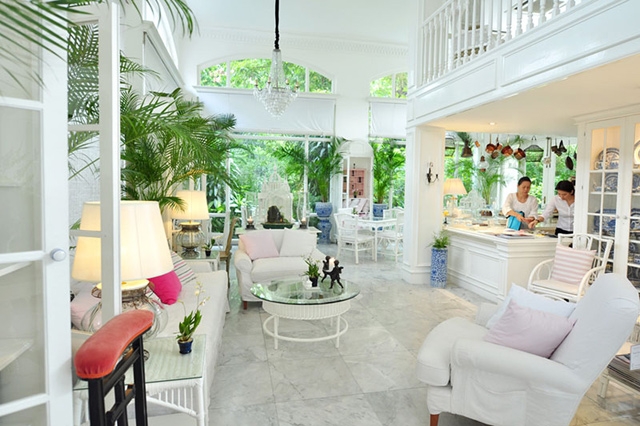
Agalico Tea Room is a beautiful tearoom in central Bangkok that has traditional English decor with a bright and modern twist. The interior is so impressive that they even have portrait photographers working on the upper olden period floors. Particularly for expats missing simple Englishness, Agalico Tea Room is a great cafe for tea lovers and cake lovers – they have pretty much every kind of Western tea available, complete with traditional teapot and teacups.

The main tearoom is light and airy with a refreshing white colour scheme throughout. Alternatively, you can sit outside in the large gardens and Pavilion. The cakes aren’t the best in Bangkok, however the ambience alone makes it one of Bangkok’s best cafes.

Price range: 120 baht +

agalico2

3

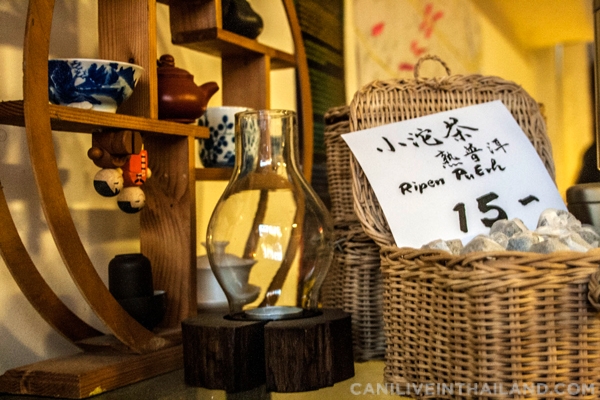
The Double Dogs Tea Room in Chinatown has a mega selection of Chinese teas, perfect for green tea lovers. The inside of double dogs tearoom makes a stark contrast against the busy craziness of Chinatown just outside – elegant Chinese furnishings, welcoming staff and warm, ambient lighting make for a tranquil atmosphere. It’s fantastic for sampling Chinese cakes, treats and teas – they even have a special tea man serving up the all-you-can-drink tea buffet in miniature Chinese teapots.

Price range: 95 to 250 baht

doubledogweb4

4

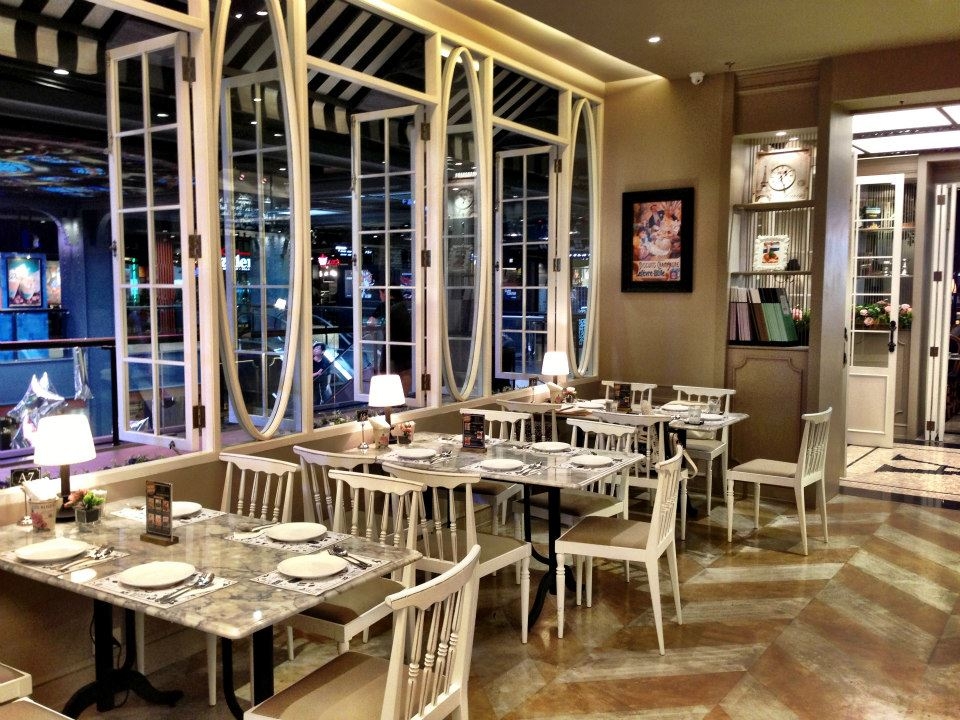
Petite Audrey is a modern European styled cafe located right in the middle of the fashionable Siam Center shopping mall. There is often a queue waiting to be seated, always a good sign of food quality. There is a great range of both savoury and sweet food with generous sized portions of waffles and ice cream sundaes. It’s perfect the stuffing your face with cake in a sophisticated cafe environment!

Price range: 60 to 300 baht

petite audrey

5

Coffee Beans By Dao is an extremely popular restaurant cafe with middle-class Thai locals. The interior is nothing special or particularly interesting – maybe even a little gaudy – but the cake however, is to die for! Make sure to get the Tobelerone cake, my favourite cake in Bangkok for sure! They also have a very extensive savoury Thai & International menu as well as humongous cake selection. If you visit the branch in Chit Lom, there is a nice seating area outside on the road front, but take lots of mosquito spray!

Prices range: 120 baht +


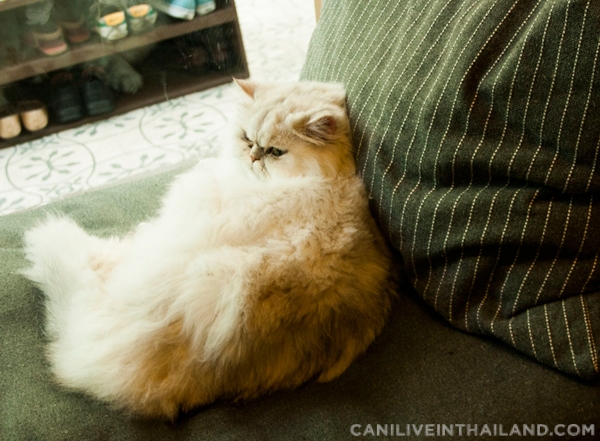
Staying in Silom? Check out the Bug & Bee cafe next to the BTS Sala Deng station – this cafe specializes in crêpes, however has a great selection of affordable cakes and smoothies too. For cat lovers, or maybe just for shits and giggles, take a look at the quirky Purr Cat Cafe in Thonglor.

cat5web

Vegetarian Food In Thailand

Despite Buddhism typically being one of the most prominent religions of Thailand, vegetarian and vegan food is actually rather hard to come by, particularly in Thailand’s capital city Bangkok.

You’ll find an abundance of skewered meats, grilled fish, processed meatballs, deep fried chicken and meaty fried… well everything, yet very little vegetarian protein alternatives. Tofu or vegetarian dishes are nowhere near as common as meat dishes in Thailand.

Thankfully, Thai people seem to love their eggs and you’ll commonly find a side serving of crispy fried eggs to accompany your meals. Or, if you’re lucky, you may sometimes come across the sweet, tamarind sauce coated and deep fried, hard boiled ‘mother in law eggs‘. Search out the right restaurants, and you’ll be able to order delicious tofu curry soups and Thai salads. Eating at some Thai street food stalls however, you may find that, as a vegetarian, you need to settle for vegetable fried rice or other unsubstantial alternatives.

thailand vegetarian

How to order vegan and vegetarian food in Thai language

For a more in-depth guide on how to order Street food in Thai check out my main Thailand street food phrase guide here. Remember, women use chan and men use pom for I. To be polite, add ka or krap on the end of sentence for women and men, respectively. When ordering vegetarian alternatives in Thai language, it’s useful to know these keywords and phrases…

Vegan: Jey
Vegetarian: Mang-sao-we-rat
I am a vegan: Pom/ chan gin jey
I am a vegetarian: Pom/ chan gin mang-sao-we-rat
I don’t eat meat: Pom/ chan mai gin neua-sat

Do you have a vegetarian menu? Mee a-haan jey mai?
Can I have vegetarian… (fried rice)? Ao (khao pat) jey?

If you don’t eat fish, be careful as a lot of Thai recipes include fish sauce – even if you do tell them that you are vegetarian. To make your order extra clear you can use the Thai phrases…

Don’t put … in it: Mai sai ….   (For example, Don’t put fish sauce in it: Mai sai nam bplaa)
I don’t eat …: Pom/ chan gin … mai dai     (For example, I don’t eat meat: Pom gin neua-sat mai dai)

Meat: Neua-sat
Fish: Bplaa
Fish sauce: Nam bplaa 
Beef: Neua
Chicken: Gai
Pork: Moo
Crab: Bpoo
Egg: Kai
Tofu: Dao-fu

Remember to add ka or krap or you might sound like a bit of an ass! Usually, a waiter or stall vendor will reply with…

Of course: Dai
No I can’t: Mai dai
Yes, we have (a vegetarian menu): Mee
No, we don’t have (a vegetarian menu): Mai mee

A vegetarian’s guide to Thailand

Okay, so it can be hard to find decent, cheap vegetarian street food in Bangkok, but you can still find some nice vegan and vegetarian restaurants around the city at not bad prices. Make sure to check out my guide on the best vegetarian and vegan restaurants in Bangkok here. Outside of Bangkok, the best place I have found for vegetarian food in Thailand is up north in Chiang mai and Pai. Many of the restaurants in Chiang mai are very vegetarian and vegan friendly with plenty of tofu substitutes and creative Western menus.

An absolute must for all vegetarians in Thailand is to visit the Thai vegetarian Festival. During this time in Thailand, 99% of all street stalls and restaurants will provide great vegetarian alternatives. There are some delicious vegetarian salads, noodle dishes and meat substitutes on offer – it’s a surprise that they don’t offer these dishes throughout the rest of the year in Thailand. You can read more about the Thai vegetarian Festival in my article here.

vegetarian3

Top 5: Local Thai Eats In Bangkok

Are you itching to try some real Thai food in Bangkok? Screw all the fancy Thai restaurants, when you dine out off the beaten path – local style – then you can truly experience Thai food in Bangkok.

Not only do the local Thai restaurants in Bangkok serve hearty and traditional cuisine, but they ‘re also super cheap if you’re travelling on a budget. At most of the Thai restaurants popular with the locals, you can dine from just 70 baht per person… And remember that these restaurants are popular for a reason.

Thai Style Restaurants

Local restaurants in Thailand have a very different vibe to the more mainstream restaurants which are aimed at tourists, they’re worth visiting if you want to see a real part of Thai culture that you could otherwise completely miss.

A typical experience dining in a local Thai restaurant is casual, where diners share food platters in the middle of the table, are served drinks from shabby metal trolleys, drink from 5 litre beer towers and maybe even get to hear a Thai folk music performance from a local singer. A really popular feature of some local restaurants in Thailand, also seems to be the do-it-yourself barbecues, where patrons cook their own food on the table in front of them.

For the best local Thai restaurants in Bangkok, here’s my personal top 5:


1

Banrie Coffee is by far my best Thai restaurant in Bangkok. It’s open 24 hours a day, has live music, cheap beer towers, a cute beer garden, laid-back atmosphere and simple good food. Banrie Coffee is perhaps a little more sophisticated than your average local Thai restaurant, it’s more of an evening hangout for both young Thais and expats in Bangkok. But not only is it a cool hangout, but this Thai restaurant also has an extensive menu of Thai cuisine at an affordable price, complete with a fairy-lit urban garden.

banrie

2

SD Bar BQ is an all-you-can-eat buffet style restaurant in Bangkok, totally Thai style and packed full of cheerful locals. It’s not got the cheapest of prices by local standards, but for the range of dishes on offer and the unlimited food, it’s really not bad value at 129 baht per person. In fact if you’re looking for a place to sample a complete range of Thai cuisine, SD Bar BQ Buffet might be just what you’re looking for.

sd

The layout of SD barbecue is casual and authentically Thai – tables are set out in long lines of benches with holes in the middle to barbecue your own food. Yep, this is a typical do-it-yourself barbecue-style restaurant (and it get’s pretty damn hot too) – of course there are other pre-cooked options available too if you don’t feel like cooking your own food. (Tip: another good barbecue restaurant in Bangkok worth visiting is the rooftop restaurant Bar-BQ)

3

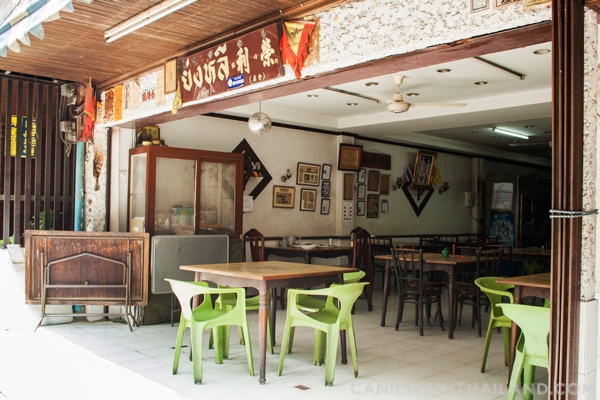
Yong Lee is a Chinese-Thai style restaurant which has been around for almost 50 years and definitely looks it’s age. With grease splattered walls and tattered old menus, this is about as local as it gets. The restaurant itself is nothing fancy but the food is still pretty good for an off the beaten path visit.

Food at Yong Lee can be a little more adventurous, with Chinese fried bowels and beef tongue soups, however there are also a range of traditional Thai dishes too. Yong Lee is great for a casual lunch off the beaten track in Bangkok.

yong2web

4

The Good View is a more extravagant restaurant compared to many other typical, local Thai restaurants in Bangkok. In fact, this is probably the most expensive restaurants out of my top 5 local Thai restaurants in Bangkok.

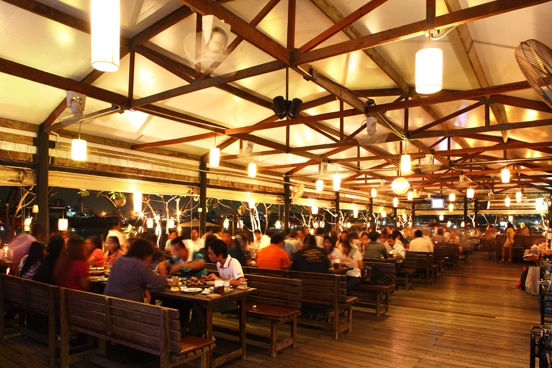
Located on the riverside, the restaurant has sophisticated wooden decking, a fairy-lit terrace and an indoor bar area with live music performances and a dance floor. It’s still pretty off the beaten path though, and has an extensive Thai, Western and Japanese menu with plenty of typically Thai beer tower’s available. If you’re after a special or romantic night out in Bangkok, Thai-style, then try Good View.

good view

5

Sabai Jai Gai Yang, like Yong Lee and SD barbecue,  is another humble little eatery in Bangkok. With a battered menu, plastic tablecloths and a modest karaoke-style folk stage, the restaurant maintains a casual yet lively atmosphere. It’s specialty is grilled chicken, however it has an extensive menu of Thai dishes and is great for sampling the local cuisine.

Sabai Jai

Picture by leolaksi

Thailand Vegetarian Festival

Thai Vegetarian Festival Roots

The famous Vegetarian Festival of Thailand, also known as the Taoist Nine Emperor Gods Festival, originated in Phuket in the 19th century. During this time, the island of Phuket had a large number of Chinese immigrants who, after widespread disease among the community, had introduced a period of fasting and abstinence to cleanse and heal themselves.

This hard going ritual gradually evolved from strict fasting to a simple vegan diet instead. During this period, participants must give up all fish, dairy, meat and poultry for nine days, plus, they should wear white from head to toe. Nowadays, you will see the wearing of white mainly practised within the temples rather than outside in the cities.

vegetarian7

During this cleansing period in the past, individuals in Phuket were found to show bizarre behaviour such as self mutilation; this was a sign of possession followed by the escape of evil spirits from the body. The Vegetarian Festival in Phuket is still the renowned home to this behaviour and hence piques the attention a lot of curious tourists, both Thai and foreign.

The Phuket Vegetarian Festival is pretty grisly and perhaps not for the feint hearted – impaling, skinning, slashing and bloodletting are all common behaviours found during the Phuket festivities. On that note, Phuket is probably the winner for the most interesting area of Thailand to celebrate the Vegetarian Festival, however you can still enjoy the celebrations and variety of vegetarian food in Bangkok and the rest of Thailand as well.

vegetarian5

Celebrating the Vegetarian Festival in Bangkok

As you might gather from the Vegetarian Festival’s Chinese roots in Thailand, it makes sense that the best place to celebrate it in Bangkok is in China Town. The Vegetarian Festival takes place all over Bangkok during October and lasts 9 days; the exact date differs slightly every year but the celebrations are always held in October.

Across the city of Bangkok, you’ll notice the streets come alive with yellow flags and bunting to represent the Vegetarian Festival. Most street vendors and many restaurants participate in the vegetarian celebrations with extra vegetarian dishes and tofu substitutes.

thai vegetarian festival

Among just a few of the typical dishes on offer during Vegetarian Festival are vegetable tom yam (spicy vegetable soup), tofu massaman curry, mushroom & tofu yakisoba noodles and a range of salads such as a sweet and sour pumpkin & mushroom. There are also a range of fake meats on offer like fake pork dumplings and meatballs made of flavoured sticky rice – some of the meat substitutes actually taste uncannily similar to real meat.

vegetarian festival bangkok china town

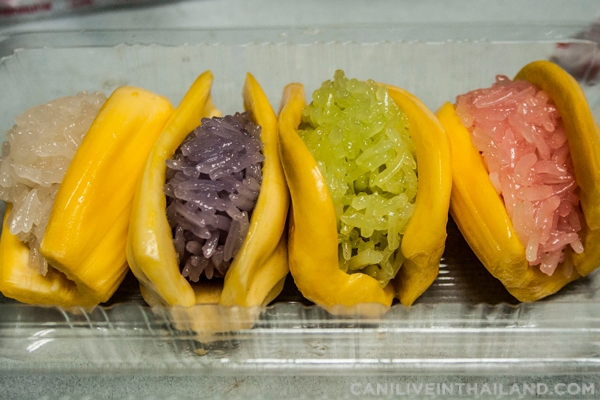
You can also find some colourful sweets and desserts on sale on the Bangkok streetwalks: Black bean sticky rice roasted in bamboo shoots; Thai breakfast doughnut served with sweet condensed milk (called Pa Thong Ko – pronounced Bpah Tong Go); and of course, the best Thai dessert of all: mango sticky rice with coconut.

vegetarian2

China Town Vegetarian Festival Bangkok

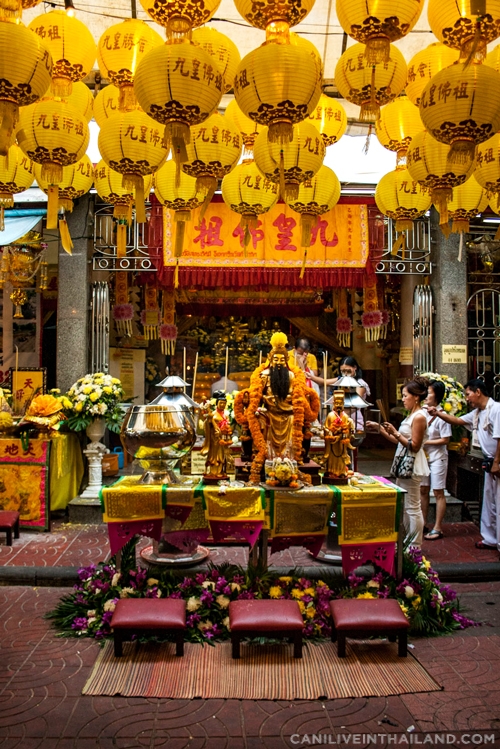
Nowhere in Bangkok celebrates the Thai Vegetarian Festival quite like China Town does! With colourful lanterns and bunting strung across the road as far as the eye can see, Yaowarat Road becomes tinged with bright yellow during all the vegetarian festivities. Hundreds of food stalls line the road side, locals gather to pray at the many temples, and traditional Chinese Opera is performed in the evenings.

vegtest4

The bottom of Yaowarat tends to have the most activity during festivities and celebrations in China Town. You can take a taxi to Yaowarat 5 or the Golden Buddha Temple, Wat Traimit. This part of Yaowarat Road has plenty of food stalls and beautiful temples to explore. The best time of day to visit the China Town Vegetarian Festival for most people is during the evening from about 6pm.

Basically, the later you head to China Town, the more lively and busy it will be, plus you might just get to catch some of the Chinese Opera performances on Charoen Krung Road Soi 20. However, China Town does get pretty crazy during the evenings so if you hate crowds, you might prefer to visit during the daytime when the atmosphere is much more subdued and quiet.

China Town nearest public transport station: Hualumpong MRT/ BTS Sala Deng

Sabai Jai Gai Yang Local Thai Restaurant Bangkok

Sabai Jai Gai Yang, also referred to as Baan Tawan Gai Yang, is an authentic, local neighbourhood restaurant to drink and dine in pure Thai style. Located in the sleek and modern district of Bangkok, Bang Na, Sabai Jai Gai Yang is a breath of fresh air where you can enjoy proper Thai food in natural Thai surroundings.

Sabai Jai Gai Yang Style

Sabai Jai Gai Yang is a casual Bangkok hangout where you can simply relax and chill out in your shorts and flip flops. The laid back, family orientated, local ambience make it a a great ‘off the beaten track’ restaurant away from the hectic tourist atmospheres or contrastingly snobbish undercurrents of other Bangkok restaurants and bars.

The Restaurant

The Bangkok restaurant has both a traditional open air section and an air conditioned indoor section. In the typical Thai restaurant style, Sabai Jai Gai Yang consists of a partially sheltered tent like surround, fold-up metal seating, plastic table covers and the standard drinks trolley at the head of the table.

Despite it’s relatively small size, there is a stage at the front where local bands play Thai tunes and pop music towards the later hours of the evening. It can get a bit loud and difficult to hear each other speak during these hours, but if you’re keen to listen to some proper Thai music in Bangkok, you’ll definitely find it here. I can’t help but feel a bit stressed out listening to the crazy overpowering beats of too much authentic Thai music myself though…

authentic thai restaurant

Picture by www.leolaksi.wordpress.com

Sabai Jai Gai Yang is the kind of Bangkok restaurant to let loose, nothing fancy; buy a beer tower or two with friends and share taster dishes in the middle of the table, Thai style.

Sabai Jai Gai Yang Menu

Sabai Jai Gai Yang have an extensive menu of both Isaan dishes and Thai food. The battered, plastic menus are thick with pages of dishes in both English and Thai. Although staff don’t speak much English at Sabai Jai Gai Yang, the menus are pretty clear with plenty of pictures to help you choose.

Isaan and Thai dishes at Sabai Jai Gai Yang are reasonably priced and start from around the 80 baht mark. For 80 baht, you can get their signature dish, half a mouthwatering grilled chicken (as in the name – gai yang) with spicy Thai dips. Admittedly it’s tasty, but it’s also a real ball ache to eat half a chicken with a fork and spoon!

Other typical cheaper dishes at the Bangkok restaurant include Pad Ka Praw (Basil stir fry) and Som Tam (Papaya salad) which cost around 120 baht. Bigger dishes such as whole steamed fish and seafood stir fries cost up to 400 baht per dish. Just bare in mind that this is an authentic Thai restaurant – the spicy Thai dishes at Sabai Jai Gai Yang are damn spicy.

bangkok restaurant

Photo by www.eatingthaifood.com

How To Get To Sabai Jai Gai Yang

Sabai Jai Gai Yang is located on Bangkok’s Ekamai Road Soi 1. You can get to Ekamai via BTS to Ekamai station, then head up Soi 63 (Ekamai Road) and Soi 1 is on the left hand side opposite Health Land. Although it is only Soi 1, this is a surprisingly long and sweaty walk (10 – 15 minutes) so you may want to take a taxi from Ekamai BTS station.

Sabai Jai Gai Yang is right on the corner of the main road and Soi 1 – the entrance is just around the back.

How To Order Thai Street Food

Thai Street food

The language can be a bit of a barrier when ordering street food in Thailand – there are not usually english menus and the sellers speak little english if any. It’s not a problem though, a lot of them can still speak very basic english to help you out. Street food in Thailand is so cheap and tasty that I highly recommend giving it a try – especially if you love to try real, authentic food.

I have given some useful phrases for ordering Thai street food below, but when attempting to speak Thai, make sure to add krap for men, or ka for women, on the end of sentences to make it more polite.

‘Issan style’ tray restaurants

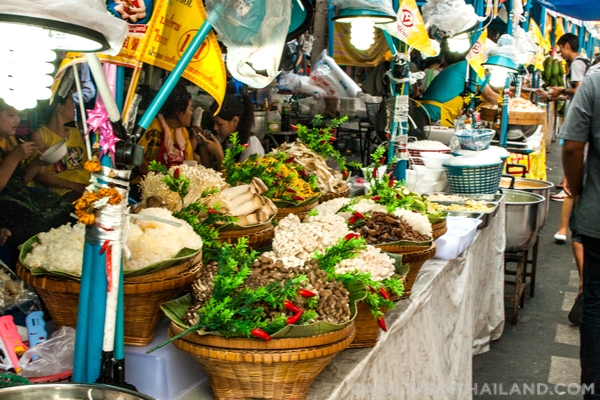
Occasionally you may come across street food stalls in Thailand that have their food already made and laid out in a selection of trays. They usually sell curry and sauce dishes to go with plain rice. It’s often easier to judge if you will like Thai street food by seeing it first anyway. The best way to order Thai food at the tray places is to just point, it’s pretty easy. You could also say the Thai phrases…

an ni – this one             an nan – that one
You could also say ao – I’d like: ao an ni krap/ka – I’d like this one please
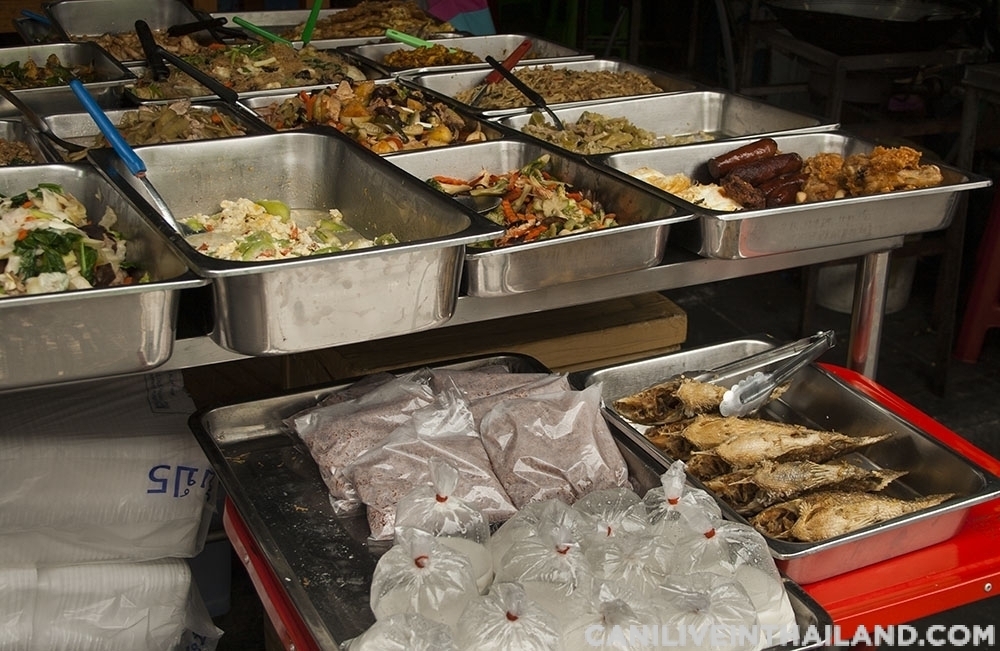
street food

Tray Style! Foods a bit cold, but hey I’m still alive

They will simply dish your chosen Thai meal onto a plate and you will pay upfront, usually around 30 baht ($1). They also have polystyrene boxes for takeaway if it looks a little cramped for you to sit down.

gin tii nii – To eat in                       sai glawng/ sai toong – To take away (box/ bag)
tan nii – To eat in                            glap baan – To take away (lit. back home)

The first Thai phrase that street food vendors will often ask you is tan nii rue glap baan, or tan nii rue sai glawng – are you eating in or taking away?

laew… (duay) – and… (as well)       kai – egg
moo – pork                                     gai – chicken

Cook on the spot 

Sometimes you might come across a Thai street vendor cooking at a small, mobile trolley with a glass cabinet full of different ingredients. These vendors prepare dishes in front of you – usually noodle soup dishes or som tam (papaya salad).
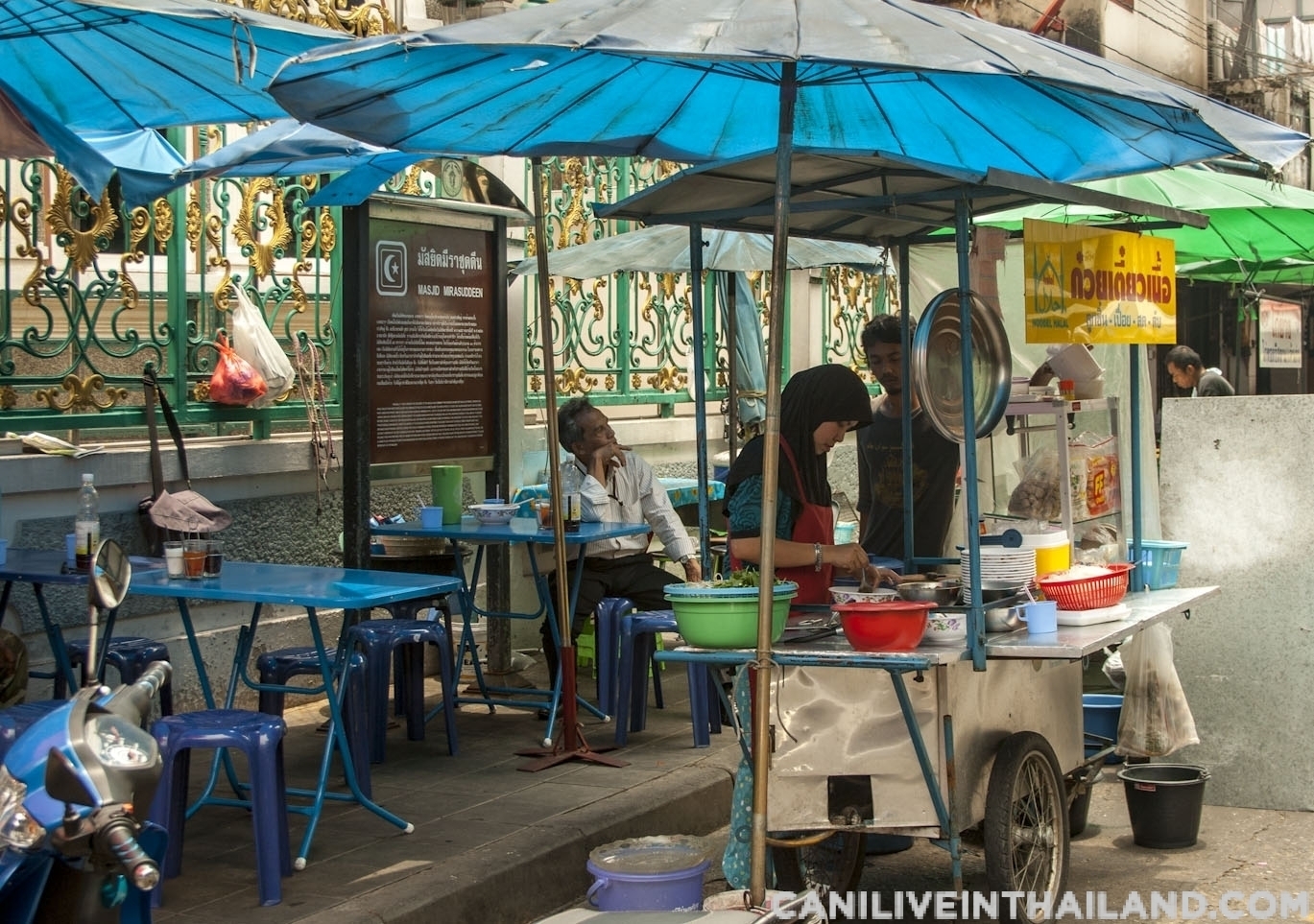
streetfood

They can be the most awkward places to order Thai street food because they often don’t have english menus, or anything written anywhere for that matter, and don’t have anything you can get away with just pointing to. These are probably the healthiest places to eat though (glass noodles are the healthiest option, being made of mung beans: woonsen) and food costs from 25 baht a serving. Some useful Thai phrases for when you don’t know what the hell the street vendor is selling are:

ao neung tuuay/jahn – I’d like one bowl/ plate
arai aroi tiisut – What is most delicious?
mee maynoo mai – Do you have a menu?
mee maynoo arai – What food do you have?
mee maynoo nehnam arai – What dish do you recommend?
Ao – I’ll have it
Arai gor dai – Whatever will do
Baep nai gor dai – Which ever will do
Moo – Pork                                   Gai – Chicken
Bah mee – Egg noodle                   Sen nai – What kind of noodle
(Sen) lek – Small (noodle)              (Sen) yai – Big (noodle)
Pet – Spicy                                   Mai pet – Not spicy

Take a seat, and they will bring your food to you when it’s ready. At these places, you can help yourself to drinks from the fridge. When you have finished, they will add up the total from your table, you can just grab their attention with your money out and they’ll get the idea. Or a casual gep dtang ka/krap (Can I get the bill please)

 Thai Street Meat

Some of the tastiest and most popular street meat in Thailand is Moo ping, also known as Moo yang – grilled pork. These are sticks of pork grilled with a barbeque sauce marinade and usually cost 10 baht a stick. There are also street vendors which sell various meatballs and cubes on skewers – reconstituted types of meat served in a plastic bag with chilli sauce. You can sometimes get sticky rice (pronounced ‘Cow Neo’) to compliment it.
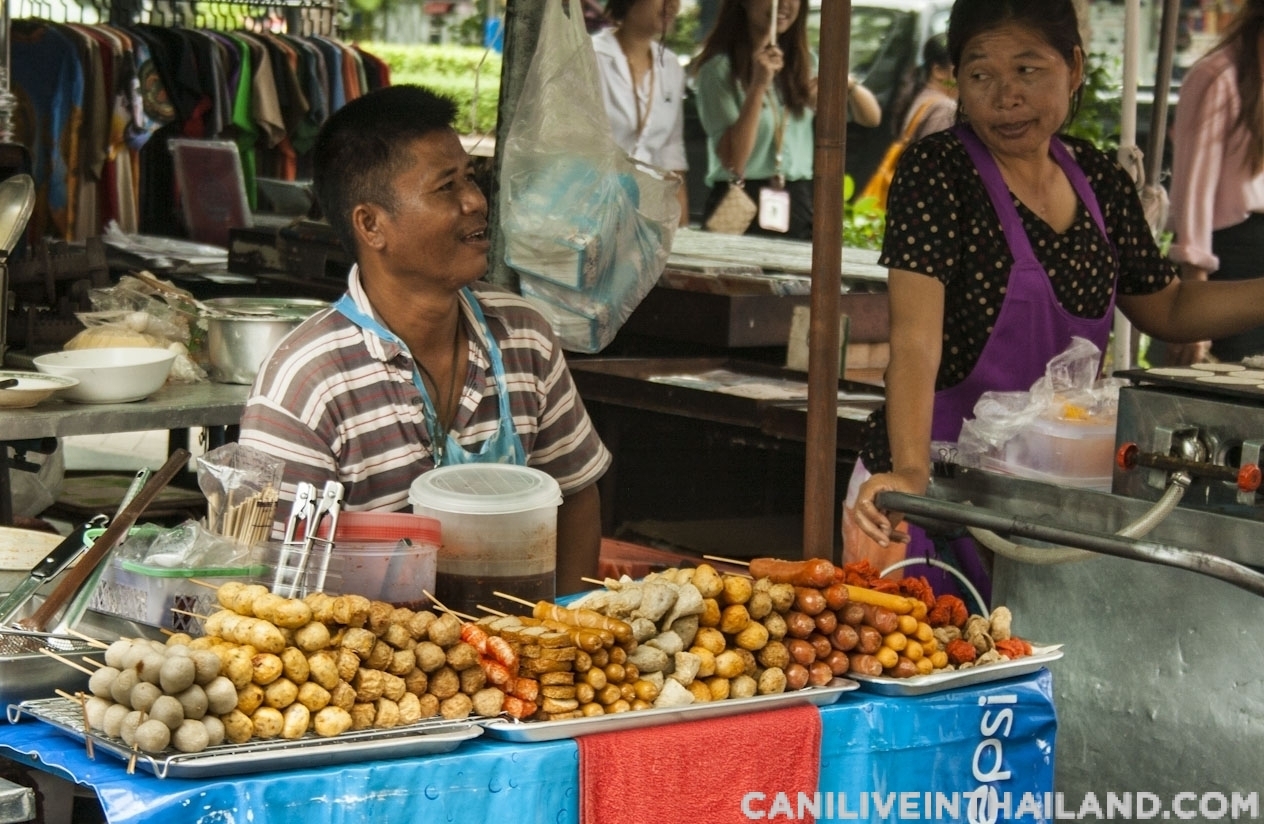
streetfood6

Other Thai street food vendors sell deepfried chicken and sausages – again you can buy this with sticky rice and chilli sauce. A piece of chicken will typically cost around 20 baht depending on the size and type. With these guys you can just point and nod but it’s always better to speak Thai. With the skewers, you can just pick out the ones you want and put them in a pile to the side and they’ll heat them up for you.

Ao neun/sawng/sam mai krap/ka – I’d like one/two/three skewers please
Ao neung/sawng/sam chin krap/ka – I’d like one/two/three pieces please
ao cow neo duay krap/ka– Can I have sticky rice too
ao cow neo neung toong duay krap/ka – can I have one bag of sticky rice too

Fruit men

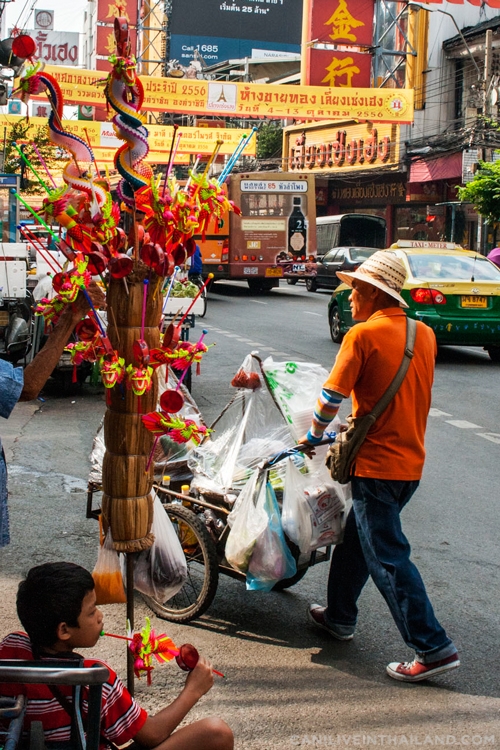
Another kind of street vendor to look out for are the fruit men. I love Fruit men. These guys wheel around a glass cabinet full of mangoes, pineapples, melon and sometimes rose apples and other fruits. Then, like a freakin ninja, they’ll chop your chosen fruit up for you and whack it in a carrier bag.
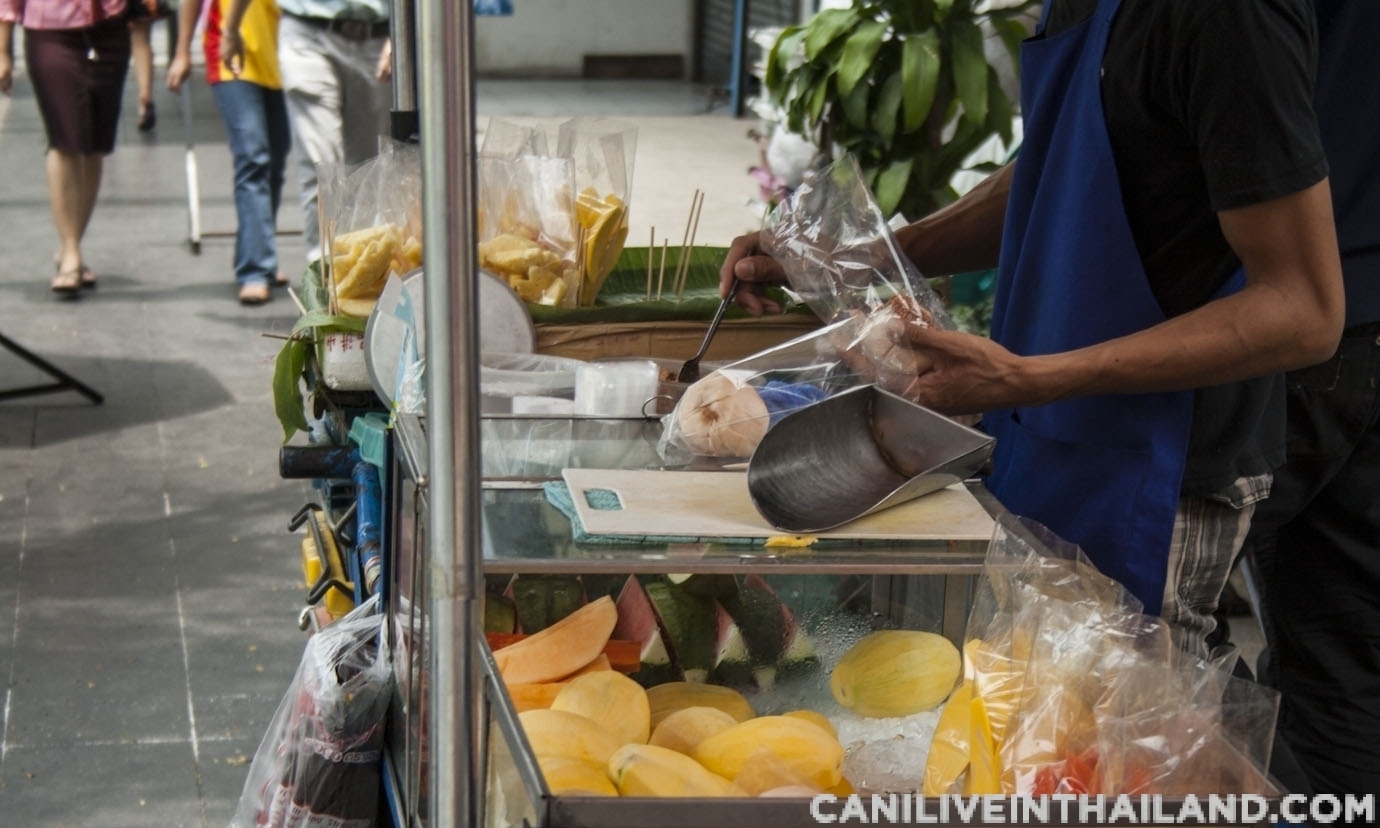
Thai Street Food

You can have a bag of sugar to go with it – a kind of salty tasting, sweet sugar. A little too much sweetness for my liking. An ordinary sized bag of fruit costs 10 baht.

Sa-ba-rot – pineapple                  Daeng-mo – melon                    Ma-muang – Mango
Ao (sa-ba-rot) neung/song chin krap/ka – I’d like one/two pieces of (pineapple)
Ao (ma-muang) neung/song luuk krap/ka – I’d like one/two whole (mangoes)

You use the word chin when asking for a piece of fruit or food, and luuk for any whole, round food item such as a whole mango or a steamed bun
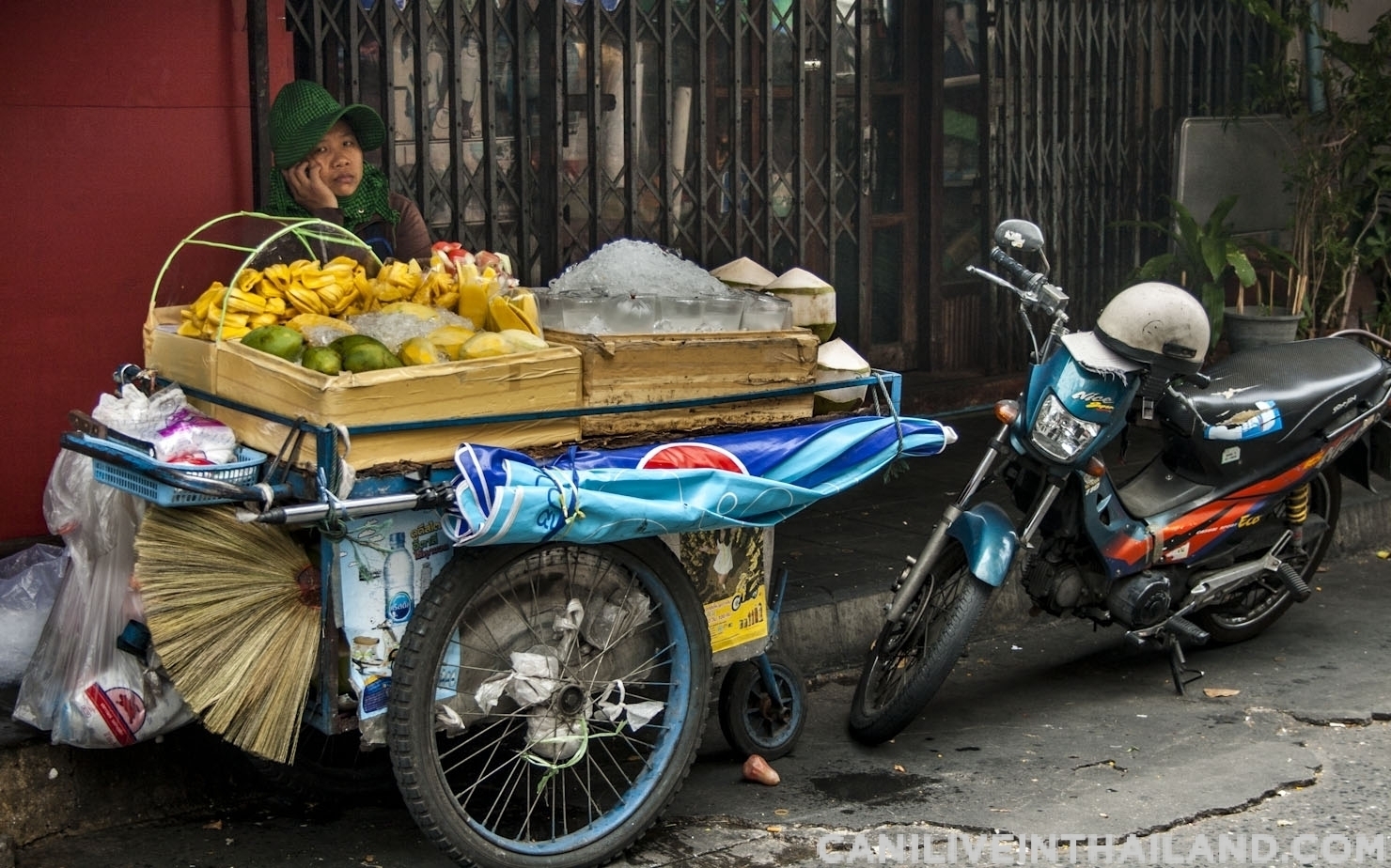
Thai Street Fruit

I think she likes me

Mall canteens

Mall canteens, usually on the top floor of all the malls and department stores, should not be forgotten as an authentic, cheap source of food in Thailand. If you’re on a budget, they are useful as most meals only cost around 30 – 50 baht and they have practically every meal you can possibly order in Thailand under one roof. The canteen at the top of Terminal 21 in Bangkok is particularly good.

Head up to the coupon kiosk, hand over 100 baht and then they will give you a card, use the card to pay at whichever food kiosk you fancy, take the card back to the kiosk and the person will give you back the balance. Easy.

You can just point to the pictures or a lot of the staff speak basic english anyway. Or, you can just say ‘tii +number krap/ka‘ to specify which number meal you want. (See the Thai numbers below)

1 neung      4 See      7 Jet
2 sawng      5 Hah     8 Bpaet
3 Saam       6 Hok      9 Gao
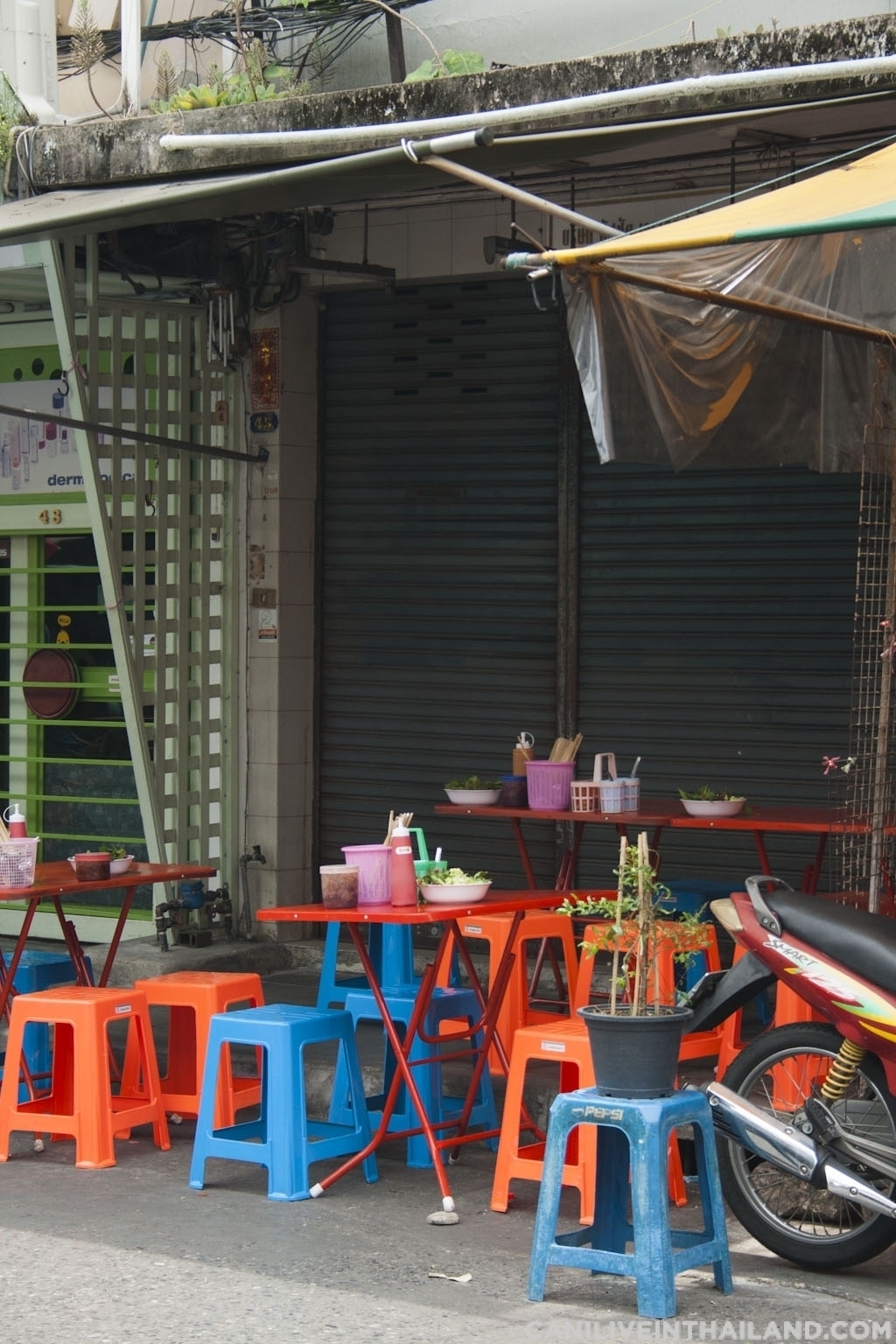
Thai food outdoors

Eating cheap in Thailand

As food is one of my biggest weaknesses and ends up burning the biggest hole in my pocket of all living in Thailand, I figured it was the most controllable of my outgoings and so I made it my mission for the last month to eat on as small a budget as possible. Without starving myself to death however and whilst eating reasonably healthily.

Anyway, I managed to squeeze my budget down to 120 baht a day simply by eating mainly Thai street food. In fact, I’ve managed to live in Thailand off of just 15000 baht a month lately. Thats about £330 or $500 – 5000 baht for my rent and 10000 on everything else.

So there you have it – it is indeed very possible to live in Thailand Bangkok on only 15000 baht a month. But eat lots of street food.

Still not satisfied? Eager to learn more useful phrases for ordering Thai food? Curious to know more about Thai street food? You might be interested in the Eating Thai Food Guide below – 100 pages of Thai food tastiness…
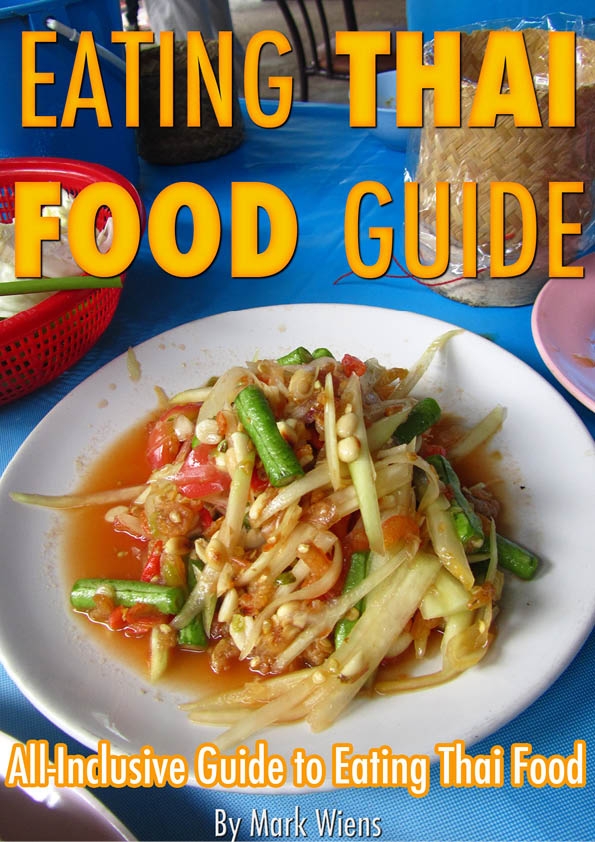
How to order Thai food
Buy the Eating Thai Food Guide eBook for only $7

Sunrise Tacos, Mexican Cuisine In Bangkok

Where to go for Mexican food in Bangkok?

Sunrise Tacos is a colourful new restaurant located in Bangkok’s Silom area, specialising in Mexican cuisine. You can find Sunrise Tacos close to the BTS Sala daeng station by following signs to CP tower, then heading towards Chong Nonsi along Silom Road from here (silom soi 4). Outside, the Mexican restaurant draws in passers-by with it’s quaint outdoor sitting area of brightly decorated tables, cushioned chairs, lanterns and imitation turf. A meal at the Bangkok Sunrise Tacos typically cost between 150 and 400 baht.

Here, the portions are quite substantial and filling and they serve fajitas, grilled meats, nachos as well as some very delicious looking cakes. However the great thing about the nachos at Sunrise Tacos, is that they have a whole selection of dips to choose from from the large and impressive dip counter that extends throughout the middle of the restaurant.

A basket of nachos and dips at Sunrist Tacos costs 59 baht. I opted for the healthy choice of grilled salsa chicken with mediterranean vegetables and mexican style rice priced at 195 baht. The chicken was perfect in texture; slightly crispy but moist on the inside, subtly flavoured from the spicy salsa. The chicken fajita was also full of flavour and just the right consistency and crispiness.

The staff at Sunrise Taco are not particularly cheerful or friendly but they are still very attentive and quick. I didn’t have any dessert as the rest of the food filled me up enough, but that looked pretty damn good as well. All in all, for two of us to dine at Sunrise Taco in Silom, Bangkok, it cost a total of 660 baht.

Some people may find the garish, brightly coloured sign off putting when passing, but if you’re a fan of Mexican food, do not let this sway you. The food is very good, well cooked and not greasy, with plenty of choice. And it is quite pleasant to sit in the outside ‘garden’ to do some people watching on the busy and energetic Bangkok road of Silom.

You can find another Bangkok branch of Sunrise Tacos in Asoke as well, just across the main Sukhumvit road from Terminal 21. It’s very close to the Asoke BTS station in Bangkok. Asoke Sunrise Tacos has large beer gardens set back just off the main road.

Money In Thailand

Cost of living in Thailand

How much the cost of living in Thailand will be for anybody depends on the things in life that are most important to that individual person. For example, I spend the majority of my money in Thailand on sports and exercise, and then on the extra food to supplement this. I live in the centre of Bangkok and I don’t eat street food for every meal, I treat myself more than a couple of times a week to some variation of good food in a cafe or restaurant. I like to spend money in Thailand travelling, exploring and I also like to buy clothes, but on top of this, for some reason I feel drawn like a magnet whenever I go in a Boots or Watsons, I just want to spend my money on everything. What is it with women and pharmacies anyway?

Beer isn’t that cheap in bars and pubs; just as an idea, the cost of a beer in Thailand such as Chang and Singha is around 100 baht a pint (£2 or $3), but you can also buy a bottle of Thai whisky like Sangsom for about 290 baht (£6 or $9); just half of one of these will easily do for me. Beers like Guinness or Hoegaarden will cost from around 250 baht a pint (£5 0r $7).

Anyway this month, my cost of living in Bangkok totalled 24000 baht (£530 or $800). I also made 5000 baht (£100 or $150) from extra work, I didn’t earn much money from work at all this month – I worked about 3 days altogether… my movie career in Thailand seems to be dying a slow death after it has only just begun. Sad times.

Anyway, from what I’ve googled and seen online, a great deal of people seem to say you can’t live on this low amount of money in Thailand, especially Bangkok, but I guess I have proof otherwise. Although I eat out a lot and spend more money in Thailand than I really need to, I just don’t think anyone could live much cheaper than this anyway; everybody has their vices in life. To have an even lower cost of living in Thailand, you would have to live frugally and not have much of a life I think. But of course the cost of living is much cheaper outside of Bangkok.

*Update: Please note that I have since managed reduce my cost of living in Bangkok to around 18000 baht per month (£400 or $600) simply by not going shopping and by eating mostly street food. You can read more about eating on a budget here.


Cost of food in Thailand for one month: 7900 baht (£175 or $260)

Most days for lunch I will eat Thai street food, either to takeaway or sit in, at 30 – 35 baht ($1) for a meal. It’s actually pretty good too. On evenings, mainly out of convenience and laziness, I will often eat at our apartment restaurant or the restaurant next door for around 50 – 90 baht per meal. A couple of times a week or more, we tend to cave and spend money at more expensive, maybe western style restaurants for up to 350 baht (£8 or $12) each.

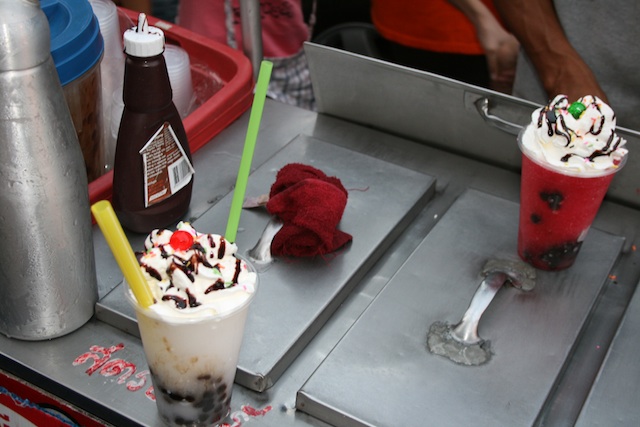
Most days I will also spend money on extra snacks such as chopped fruit bags, meat sticks, dumplings, steamed buns, fried chicken, soy milk and the odd bubble milk tea; all of which cost from 10 baht per serving. 1150 baht of my spendings this month was used at 7 11s and Top supermarkets mainly on toilet roll, cereal, milk and bread. Cereal is a luxury in Thailand, one box can cost up to 300 baht… Furthermore, water in Thailand is pretty much negligible as you can buy it purified from Reverse Osmosis machines for 1 baht per litre.

Bubble milk drinks from a street vendor

Cost of transport in Thailand for one month: 2738 baht (£60 or $90)

I spend money on the Bangkok BTS sky train on a daily basis. 900 baht (£20 or $30) of this total was spent on the MRT subway, the ferry and topping up my BTS carrot card. I spent 600 baht on taxis, mainly to get to work in Bangkok in the unsociable, early hours of the morning or basically whenever other times the BTS is closed at night. Getting around Bangkok city in a taxi shouldn’t cost any more than 200 baht a journey – taxis in Bangkok for me usually average around 100 baht per ride.  A typical journey on the BTS can cost between 15 baht and 50 baht per journey depending on the distance (the MRT underground is also very similar in price). The ferry usually only costs 15 baht. I spent another 900 baht on a 460 km return train and bus journey when making a trip up north. The remaining 300 baht went on two days of moped rental (after splitting between the two of us).


Cost of rent & bills in Thailand for one month: 5500 baht, split between two (£120 or $180)

We pay 10,000 baht for a 40 sqm studio apartment which is situated 10 minutes walking distance from a BTS station in Bangkok. If you live alone, you can find a basic, smaller studio apartment from 4000 baht; for a couple you can find slightly bigger apartments from 8000 baht. It will obviously cost more money the closer you live to the centre or subway/ skytrain in Bangkok. You can find more information in my article renting in Bangkok.


Cost of clothing in Thailand for one month: 4000 baht (£90 or $130)

With this money, I practically bought about 8 new outfits from Platinum Mall and Siam for 1050 baht, at Boots and Watsons I spent about 900 baht (what the hell I spent that on other than sun cream I do not remember! Shameful), 200 baht on phone topup and 1300 baht on a ukulele. Anyway, for more information on average costs of clothing and souvenirs in Thailand you can check the prices here.


Total spent on recreation in Thailand for one month: 3400 baht (£75 or $115)

This includes 600 baht spent on booze, 2000 baht on hotels and 750 baht on a cycle tour (you can see more details on this by clicking here)


Cost of gyms and fitness classes in Thailand for one month: 1000 baht (£20 or $30)

This covers two pole dance classes costing 500 baht per class. I am also a member of a gym in Bangkok but paid for this upfront for 6 months. Technically, this would work out to cost about 2000 baht per month as well.


For more information on the cost of living and money in Thailand, you can check out more on my expenses here: Month 1 and Month 2


Protein In Thailand


Bodybuilding in Thailand

For some people, bodybuilding may be regarded as a high priority in their daily lives and hence may be a concern when moving to a different and unfamiliar country like Thailand. There is more to keeping in shape and developing your body to just working out – diet is equally important. For more rigorous exercise like bodybuilding, you need a lot of protein and sometimes it’s not possible, or particularly healthy, to get this from food alone.

Unfortunately, protein in Thailand is expensive. On average you will find 1kg of protein powder to cost around 2000 baht (£40) in Thailand. You’ll get roughly 20 servings out of this. Milk in Thailand costs about 80 baht (£1.60) for a 2 litres carton of milk. So I’d say it works out to about 70-80 baht to make your own protein shake in Thailand. At a typical Thai gym, you can purchase a protein shake at the cafe for around 100 baht.

You can buy protein powders and protein bars (bars from 120 – 170 baht each or £2.40 – £3.50) from most pharmacies and Boots shops in Thailand, although none of the brands of protein are particularly high quality ones like the ones you can get in other countries. However, in Bangkok, the best place I have found so far for protein supplements and similar bodybuilding supplies is located in Silom.

Where to buy protein in Bangkok

Head west down Surawong Road from the Rama IV intersection near Sala Deng BTS. Pass the ‘Japanese street’ – Thaniya Soi 2 and you will find a local pharmacy called DD Pharmacy on the left hand side with a range of whey protein and body building supplements in the window. I have found this to be the best source of whey protein for bodybuilding in Thailand.

Meaty foods 🙂

High protein foods in Thailand

Protein shakes may be expensive in Thailand but there are still plenty of economical and natural sources of protein in Bangkok. There is plenty of street meat available, although some of the meat may not be particularly healthy. You’ll find a great deal of deep fried chicken and unidentifiable meatballs on skewers, which, although surprisingly tasty, is mostly heavily processed (and, according to recent news, possibly made from Soi dog meat). Moo Ping (barbecued pork on skewers) is a tasty source of protein but very fatty.

You can still find many street vendors in Thailand barbecuing some healthier pieces of chicken or fish though. The barbecued meat is really tasty and, as far as I know, maybe the healthiest option for street meat. Barbecued chicken typically costs from around 30 baht, depending on the size of it, and grilled fish will cost from around 80 baht, again depending on the size.

Meatball skewers generally cost 10 baht per stick and come with a dollop of chilli sauce in a bag. You can buy deep fried chicken with a bag of sticky rice and chilli sauce for about 35 or 40 baht (or on its own for around 25 baht – thats 50 pence or 70 cents), but it’s probably a little bit fatty and greasy for some bodybuilders. Assuming most expats bodybuilding in Thailand are reasonably health conscious anyway.

7 11s are abundant in soy milk drinks to give you a protein boost. I have found the red cartons called ‘Vitamilk Big’ to be the best ones; the least sugar and 10 grams of protein per carton. These cost 10 baht each. What with 7 11s existing practically every 300 metres apart in Thailand, chances are there will be one outside wherever you workout – buy three of these fuckers and you’ve got your post workout 30g protein intake. Bam.


If you’re interested in checking out the gyms in Bangkok as well, take a look at my Gym Directory here.