Thailand Cost Of Living – Month Two

money in thailand


Money In Thailand

As promised in my previous article here, I have carried on keeping a record of my spendings for my second month living in Bangkok. It’s not all good news as I spent much more than expected this month – I was hoping for it to be less rather than more as I should be learning to save my money in Thailand better by now.

This month, I spent a total of 47721 baht (£1050 or $1600). However, I did join a gym for a large chunk of money of 12500 (£260 or $420) baht and I went on holiday to Malaysia for 17500 baht (£370 or $580). And then after you add on the 7800 baht I earned from working as an extra, I actually technically only spent 17721 baht (£390 or $590)… Still not good but we’ll see how it goes next month ;p (kind of cheating too as 17721 would really be the amound spent over 3 weeks, not a month)

Cost of food and drink in Thailand – 6572 baht (£130).

This includes trips to the 7/11 and Tops supermarket for all kinds of consumables such as toilet roll, hand wash and cereal. This only really covers about 3 weeks of this month as well, as I went on holiday to Malaysia for 1 week this month… So I actually spent more than last month despite my plans to save more money! It doesn’t really help that I’ve gotten to a point where I am absolutely sick of Thai food this month, so have had to spend whatever it takes to survive and eat whatever western food I fancy! Hopefully this will pass and I can return to eating cheaper Thai food once again :/

Cost of transport in Thailand – 1470 baht (£30).

This covers catching the BTS most days and the odd taxi to Extra jobs which are outside of BTS opening hours.

Cost of shopping in Thailand – 2363 baht (£45).

I actually wouldn’t usually have spent this much but had to keep running out and buying cheap clothes for extra jobs. Hopefully having some more clothes will end up paying for itself so I can use them for work. In all fairness, I got a lot of clothes for this money e.g. a pair of office shoes for 250 baht from a street vendor in Siam.

Cost of gym membership and Fitness classes in Thailand – 14350 baht (£300).

I try and attend a pole dancing lesson once a week which costs 500 baht per hourly session at Rumpuree dance studio. I also splashed out this month on a hefty six month gym membership at Clark Hatch which cost me 12500 baht. Hopefully this will work out cheaper in the long run though!

Cost of rent in Thailand – 5000 baht per person (£100).

Cost of utilities in Bangkok – 466 baht (£10).

Cost of water bill this month was 30 baht each (between two of us) and electricity was 430 baht each.

Cost of visa run to Malaysia – 17500 baht (£370). 

For a weeks mini holiday to Kuala Lumpur to visit the embassy and apply for a visa it cost 17500 baht. This included flights, hotel, spending money, visa fees and food. For more details on this, click here

Money earned from Extra work in Bangkok + 7800 baht (£170).

For 5 days of work.

Bangkok Gadget Shopping Guide


Where to buy gadgets and phones in Bangkok

The two malls with the biggest selection of technology and gadgets are MBK and Pantip Plaza. MBK has a whole floor teaming with booths selling mobile phones, accessories, cameras, laptops, cables and other computer bits and pieces at a reasonable price. It’s best not to go on holiday to Thailand with the mindset ‘I‘ll wait until I get to Thailand to buy it, it will be cheaper there‘. Well it’s not. Big brand clothing and technology is more expensive in Thailand than it is in western countries surprisingly.

You can, however, buy some cheap knockoff mobile phones, cables and other computer accessories at not too bad quality in Bangkok. For example, a knockoff mobile phone make of a Samsung Galaxy S4 is just 3500 baht – it looks exactly the same and seems to function pretty well too.

For a more specialised shopping mall catering for gadgets and mobile phones, make sure you head to Pantip Plaza Technology Mall. Pantip Plaza is pretty much like something out of an apocalyptic sci-fi film (Blade Runner comes to mind) – messy, disorganised, lots of wires and blinking lights everywhere… It’s definitely worth a visit though! You’ll find Pantip Plaza on Petchaburi Road right next door to Platinum Fashion Mall near Baiyoke Tower.

pantip

Pantip Plaza

For a more trustworthy shop to try, completely free of dubious knockoff brand mobile phones and gadgets, you may want to visit a Big C. Big C is kind of like Thailand’s equivalent to Walmart or Tescos. Head to the top floor of any Big C and you’ll find the technology section with plenty of the latest gadgets and mobile phones at possibly the most reasonable price in Bangkok.

Where to buy Thai souvenirs and holiday gifts in Bangkok

For your typical Thai crafts to buy as souvenirs or gifts from your holiday, you can pretty much head to any Bangkok market and find a stall selling bags, carvings, lights and sarongs etc. MBK mall has a huge selection of all the standard Thai souvenirs on it’s top floor.

Chatuchak weekend market and Asiatique  offer a huge choice of hand made Thai trinkets with a few added quirky, unique gifts as well. Chatuchak in particular has a great section of home furnishings, teak wooden lamps, Thai silk quilts and wall hangings.

If you’d prefer somewhere in Bangkok a little quiet to shop for your Thai souvenirs and gifts, try Amarin Plaza in Chitlom. The Amarin Plaza mall is very quiet (I don’t know how it’s still even open) and has a whole floor dedicated to Thai crafts and gifts. Please be aware, that Amarin Plaza will not be as cheap as Chatuchak or Asiatique.

LTP Learn Thai Podcast Review


Learn Thai Podcast is the best home learning Thai language course I have found yet. You can download a free demo from their website www.learn-thai-podcast.com to try it out. It costs $197 to downoad all the content and have a years support from the staff atLearn Thai Podcast. Although it states on the website that $197 is their current promotional price, don’t feel like you need to hurry up and buy it before the offer ends – it has been $197 for at least the last two years ;p

What you get:

There really are enough lessons with Learn Thai Podcast to keep you occupied for years: The beginners section contains an ever-growing selection of 300+ vocabulary lessons, 40+ of each Grammar, Review and Conversation lessons. The vocabulary lessons only last a few minutes, while the grammar, review and conversation lessons can last between 10 and 20 minutes.

In the Intermediate section of Learn Thai Podcast, there are 70+ lessons of each Vocabulary, Grammar, Review and conversation lessons. And then there are even more lessons in the advanced section which I can’t comment on so much as I haven’t got there yet! As well as these lessons there are also some writing theory lessons. Altogether, there are something like 800+ video and audio lessons on Learn Thai Podcast, all of a reasonable length.

 Is Learn Thai Podcast any good? Review:

The downside of Learn Thai Podcast

The vocabulary lessons in Learn Thai Podcast tend to cover a group of about 8 – 10 new words from a specific topic. I found I never really used these lessons so much as they tend to be quite boring and repetitve… literally just one word repeated after another, and I personally find that kind of learning to be a complete waste of time as my brain does not associate the words with the meanings if I just learn them from a meaningless list.

The conversation lessons on Learn Thai Podcast, I also found to be a little useless. Conversation lesson 1 for example, was a clip from a Thai movie; the dialogue was very complex and the speakers talked very fast and slurred. It was not a good lesson for a complete beginner let alone someone with a reasonably good understanding of Thai! I found all of the conversations to be like this – too fast and of low quality recording. Jo, the speaker in all the other lesson recordings, consistently spoke very clearly and concisely, so it was just way too big a jump in speed to be able to understand. They also just seemed haphazardly slapped on the end of the other lessons, completely unrelated in content. It would have been so much better if they had been in some way connected to the other lessons and vocabulary to reinforce everything already learned, but instead I found these Learn Thai Podcast lessons to be quite frustrating and demoralizing.

Last but not least, the monotonous tone of the Learn Thai Podcast speaker, and the methodical sometimes soulless approach did get a bit much sometimes and I got really quite bored with it. Sometimes I needed to take a break for a few weeks before I could go back to it. My boyfriend couldnt even cope with 1 lesson, he found it to be so dull. So if you need something a little more fun and colourful to help keep you motivated, Learn Thai Podcast might not be for you.

The pros of Learn Thai Podcast

Well despite the vocabulary and conversation lessons being a wee bit useless to me, the other lessons of Learn Thai Podcast were so useful to me and so plentiful that it totally made up for this! The grammar lessons introduce grammar rules and put them into example sentences, breaking down each sentence structure word by word. They are very in depth and cover a wide range of useful words and sentences. The review lessons are basically just a recap of the grammar lessons. The first half, you will hear sentences and be given a chance to translate what was said. The second half, you will be given a sentence in English and then be given the chance to say it in Thai.

What I love the most about Learn Thai Podcast is the structured and thoroughness of it’s syllabus. No details are left out of the grammar lessons and everything is explained from scratch. If you are a methodical and structured learner, these lessons will be great for you. I find other courses and books to just gloss over some rules and leave you scratching your head wondering why it is the way it is. Even going to my Thai school, I found Learn Thai Podcast was much more useful and in depth than my lessons there and I see a lot of other students becoming frustrated at that sort of thing all the time.

Although I could not understand much of the conversation lessons from Learn Thai Podcast, the ones I did do were actually quite useful in that they focused on real Thai speech – slang and casual speech patterns, ending particles and that sort of thing. Most learning materials don’t seem to cover this. Lastly, for tones, it is also incredibly useful. There are just 2 x 20 minute lessons at the start which cover the tones, but I listened to them and practised them over and over again until I could recognize them and they really did help a lot. In fact, I get told quite often that my pronounciation of the tones is very clear! I still can’t hold a conversation in Thai but I can pronounce my tones that’s for sure!


$197? Best $197 I ever spent. I’m still not great at Thai, I’ll be honest… but that’s mainly down to my own personal problems with my squirrel-like brain… I would no way have come as far as I have with my studies if it was not for Learn Thai Podcast. If you can do a Learn Thai Podcast lesson everyday or as often as you can, it will help reinforce your understanding of Thai so much that it will become more natural and ingrained into your mind. So unless you are the kind of person who easily loses enthusiasm and interest (especially if you don’t have pretty pictures and colours to mix things up a bit), then go for it. I think Learn Thai Podcast is the best course out there by far.

Where To Live In Bangkok

Areas Of Bangkok

The best place to live in Bangkok mainly depends on each expat’s priorities and commitments they will have while living in Bangkok. There are the ‘Hi-so’ areas of Bangkok for those with good job prospects and finer tastes, and there are places to live more suited to a local Thai style for those on a budget.

Understandably, apartment rent in Bangkok typically costs much more when located closer to a BTS or MRT station. For many, once they have become a seasoned Bangkok expat they tend to grow a distaste for walking more than two minutes in the sweaty Thailand heat! Therefore, renting near a BTS station can be well worth the extra cost…

You can find the BTS, MRT and airport link routes and their areas on the map below (the green, blue and red lines respectively). Although you may want to bear in mind that some condos in Bangkok offer a free shuttle service to the nearest station.  

If you plan on driving or don’t mind commuting by bus, songtaew and motorbike taxi, then you will find much cheaper condos and even more flexibility of where to live in Bangkok. Areas of Bangkok such as Bangkok Noi, Pinklao, Ratchada Thapra (both located to the west across the Chao Praya river), Lat Prao and Lak si further past Chatuchak, all provide great value accommodation.

It can be difficult to decide where to live in Bangkok without knowing exactly where the different districts, transport links and essentials are located.

Best place to live in Bangkok
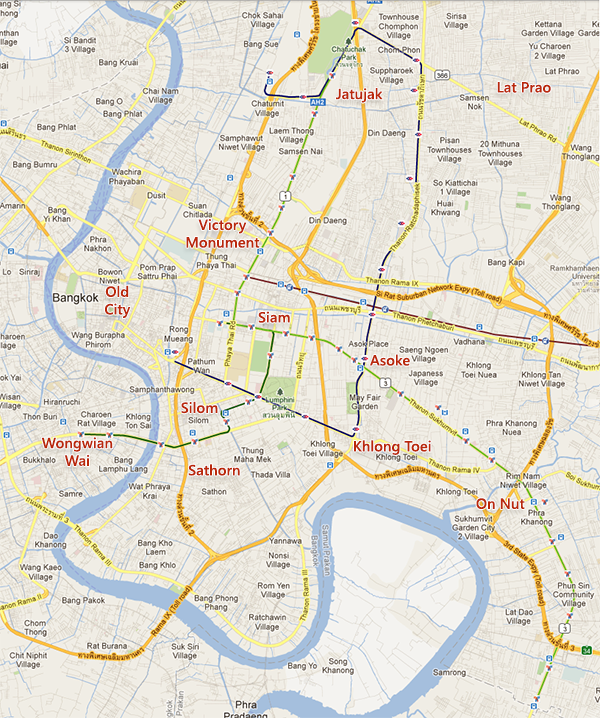
 

bangkok map where to stay


Pathum Wan district – Central Bangkok

BTS: Siam, Chit Lom, Ploenchit, National Stadium

Pathum Wan stands as the central area of Bangkok and is home to a huge chunk of the mega expensive and fashionable malls of the city. For both human traffic and transport traffic, it is perhaps the busiest and liveliest area you could live in Bangkok. If you stick to the main streets of Siam you’ll find the glamorous hi-so socialites and fashionable business folk of Bangkok, yet veer off slightly to the side streets and you’ll find bustling local streets exploding with cheap stalls and food carts.

The centre of Bangkok has everything you could possibly need: Live music, yoga classes, pole dance classes, gyms, restaurant brands from around the world and even a giant Blade Runner stylee technology market, Pantip Plaza – get bored and there will probably be something going on or some kind of activity you can take up in this Bangkok centre.
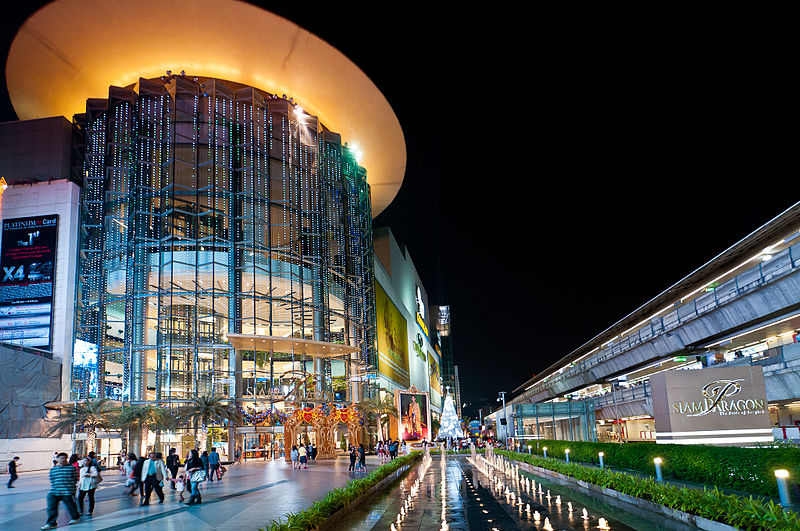
siam bangkok area

The centre of Bangkok will be particularly appealing to the shoppers and expat fashionistas. Conveniently, a skywalk even runs through a large part of Siam, connecting all the big Bangkok shopping malls with Chitlom BTS stations. You’re never too far from the luxury of air con here – people in the centre really don’t like to sweat too much…

The Bangkokians in Siam tend to be very glamourous and fashionably dressed. Let’s just say walking around the shopping malls here… I feel like kind of a pauper scruffbag. If you search for apartments near the National Stadium side of Pathum Wan though, you can still find some affordable places to live and still be in a great Bangkok location.

Cost of Living in Pathum Wan: $$$$ – $$$$$

Points of interest in Pathum Wan: Siam Centre, Paragon, Central World, Siam Square

Where to live in Bangkok Pathum Wan: Budget apartments near National Stadium – 74 Mansion, Patumwan Oasis


Rattanakosin

Ferry Pier: Phra Athit

Rattanakosin is located away from the subway and skytrain systems, perhaps to preserve it’s historic roots as the Old City of Bangkok. The area is great for tourists but not so great as a place to live for expats in Bangkok. Getting around can be difficult as traffic is terrible and taxis often refuse fares and are reluctant to take passengers far.
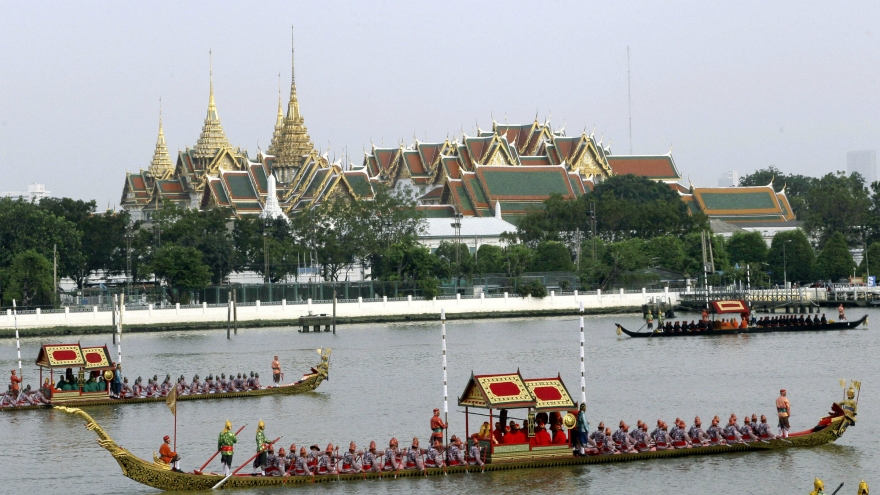
old city area bangkok

Options are limited between taxi and ferries on the main canal and the Chao Phraya river. The district of Rattanakosin is also a little less modern than other areas of Bangkok, lacking in amenities due to the lack of expats living there. There are still expats living in Bangkok who enjoy renting in this area though, mainly those who work there or others who peacefully stick to the hidden away hippy communities.

Cost of Living in Rattanakosin: $$

Points of interest in Rattanakosin: Khaosan Road


Phayathai

BTS: Victory Monument, Phayathai, Rachathewi, Sanam Pao

The Phayathai district is ideally located in central Bangkok within very close distance to Siam centre. The BTS system allows easy travel between all the main areas of Bangkok such as Siam, MBK, Silom and Chatuchak weekend market which are all within just a couple of stop’s reach.

Phayathai is perhaps the best location in the city for public transport. The traffic is terribly busy in the area, but expats in Phayathai have access to Bangkok’s airport rail link and city link, the BTS system and the mini bus hub. Yet despite it’s convenient, central location and fantastic transport links, you can actually find some good value condos for rent in the area.
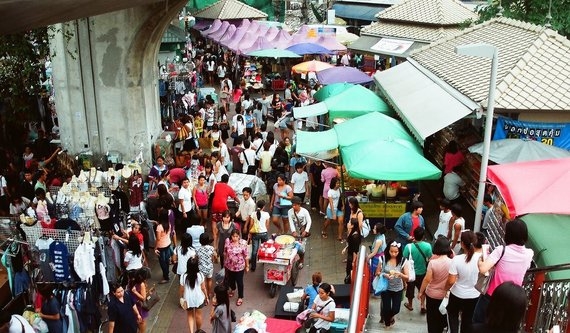
phayathai

The area around the Victory Monument and Rangnam Road offers plenty of entertainment such as shopping, restaurants and Thai nightlife, plus some great bars with live music such as the Rock Pub and Saxophone Pub. Phayathai is not overly touristy so you can rest assured that you won’t get hassled too much by Tuk Tuk drivers like in Nana, Silom or Rattanoskin, but it is still an extremely busy and lively area to live in Bangkok.

In the evenings, the streets become heaving with crowds and street stalls selling food and clothing. For some expats, it can be a little overwhelming and hectic to live amongst this after a while. Nonetheless, if you love a bit of classic hustle and bustle, you can rent surprisingly cheap apartments for such a central area of Bangkok… plus it’s definitely a hard area to beat for convenience and entertainment – Thai-style!

Cost of Living: $$$

Where to live in Bangkok Phayathai: Budget – 21 Living Place, 507 Residence


Bang Rak Silom

BTS: Sala Daeng, Chong Nonsi / MRT: Silom

Silom offers pretty much everything you could possibly need while living in Bangkok and provides a lively atmosphere 24 hours a day, everyday. Silom boasts a wealth of multi-national bars, irish pubs, pizzerias, sushi restaurants, markets, malls, useful shops and supermarkets ideal for expats in need of some home luxuries. On the other hand, there are plenty of cheap, local places to eat for those living on a budget in Bangkok as well.

The Silom area of the Bang Rak district is conveniently located in close distance just stops away from the main centre via both BTS and MRT. It’s both a convenient and entertaining place to live, however this does come at a cost. Apartments are hard to find for less than 15000 baht per month minimum. By all means though, if you can afford to live in this area of Bangkok it may well be worth paying the extra money.

It’s useful to know that there are two sides to Silom that are extremely different in atmosphere. The attractive, palm tree lined western end of Silom, nearest the Chao Phraya river, is considerably more subdued and less lively during evenings, whereas the eastern end, that surrounds BTS Sala daeng and borders Lumpini Park, is quite the opposite. On the main Silom road here, as dusk falls and the highstreet shops start to close, the streetwalks begin to quickly fill up with vibrant, fairy light-covered night stalls, where you can buy shoes, bags, dresses and trinkets throughout the whole night.
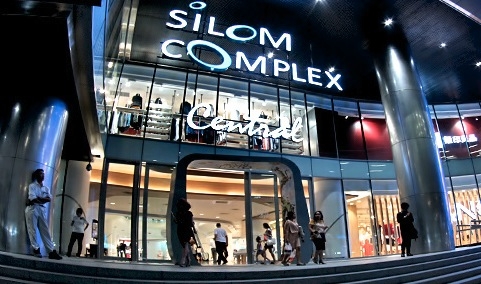
silom

The red light district area in Sala Daeng, known as Patpong, may be seen as rather seedy and unappealing to some. It is pretty harmless and easy to avoid once you know the roads though.

The whole of Silom is a popular area in bangkok to stay for tourists. This means you might get some of the usual tourist trap shouts by tuk tuk drivers and restaurant workers like ‘Oi you! Where you going? You want Thai food? Ping pong show?’. This may get annoying for some people. Not only is the Silom area of Bangkok a hotspot for locals, expats and tourists, it is particularly popular with Japanese expats, hence you will find the famous ‘Japanese Street’, or Thaniya Road, brimming with Tokyo style neon signs and Japanese restaurants.

Cost of Living in Silom: $$$$

Points of interest in Silom: Roadhouse Pub, Central Silom Complex, Patpong night market, Lumpini Park, Thaniya Road

Where to live in Bangkok Silom: Luxury – The Legend Apartments


Bang Rak Sathorn

BTS: Saphan Taksin, Surasak / MRT: Lumphini

Sathorn is somewhat more of a business district area of Bangkok and hence has a slightly more subdued atmosphere than some of the other central areas of Bangkok. Weekends are eerily quiet but the weekdays provide a balanced, lively crowd of bustling locals and business workers.

Sathorn makes a good place to live in Bangkok for an atmosphere that sits between the busy, hectic tourist centres of the city and the perhaps less interesting, outer areas of Bangkok. It makes for quite a pleasant, hidden escape from some of the craziness you might find in Phayathai, Nana and Silom, for example.

Location-wise, Sathorn is ideally situated on the BTS route just a few stops away from the centre of Bangkok, still close to all the main activity of the main city. The western end is a little more quiet than the eastern side with quaint backstreets offering plenty of local activity and cheap Thai cooking. It provides easy access to BTS Surasak as well as easy walking distance to the western side of Silom.
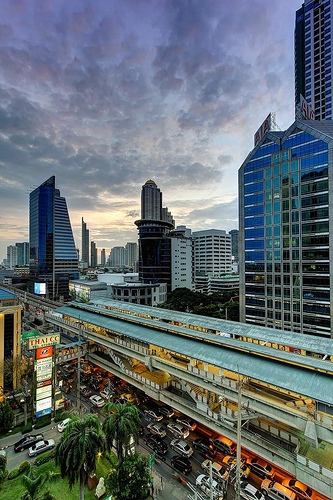
sathorn

Just one stop away on the BTS, you can find the central pier which will grant you access to all the areas along the Chao Phraya river. For those on a budget living in Bangkok, you can find some relatively cheap apartments for rent towards the western end of Sathorn; studios start from as little as 5000 baht per month and provide a convenient base to commute or travel around the city.

The eastern end of Sathorn, towards Lumpini Park and Lumpini MRT station, offers slightly more sophisticated and professional surroundings: you’ll find the Life Center shopping mall elegant restaurants and five star hotels dotted along the main road.

Cost of Living: $$$

Points of interest in Sathorn: Jameson’s Irish Pub, Launch Pad Co-work SpaceChinese Cemetery & Park, The Life Center, Lumpini Park

Where to live in Bangkok Sathorn: On a budget – Sathorn Saint View (Review here), Baan Sathorn, Purita Apartments, Medium – Littlest Guesthouse, Thai CC Residence, Luxury – Sathorn Gallery Residences


Sukhumvit 9 – 27

BTS: Nana, Asoke / MRT: Sukhumvit

Sukhumvit is the extremely long, main road that runs through Bangkok city and connects all the areas by numerically ordered numbered sois. When you live in Bangkok, you’ll find that people use the Sukhumvit Soi numbers to explain locations to people – the smaller the number, the closer to central Siam.

The Nana and Asoke area of Sukhumvit is a hugely multicultural area teaming with expats and holiday makers from around the world. Nana in particular is a very lively and busy area of Bangkok. On the main Sukhumwit Road through Nana, it’s actually difficult to walk on the paths without being hassled in one way or another; being persuaded to buy a suit or hounded by the street stall owners along the way.

Personally, I find Nana busy in a bad way rather than a good way, and I find it a chore to make it through the hectic way of the sidewalks – this may be all fine and dandy for tourists who might actually be interested in the souvenirs for sale and the prospect of tailor made suits, but for expats it’s just a plain pain in the ass.
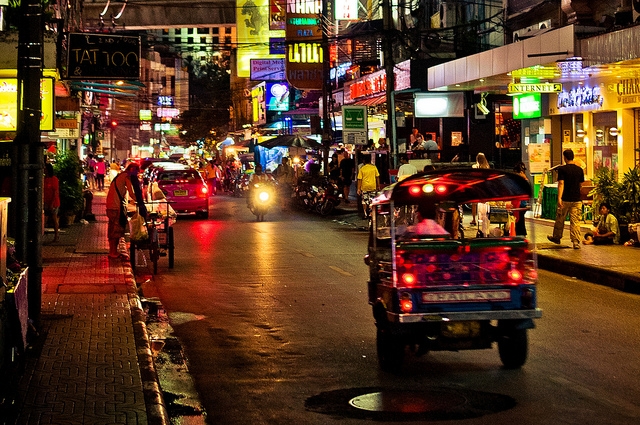
nana

Location wise, Nana and Asoke make a convenient place to live in Bangkok, being only three stops away from the centre station at Siam and just a 5 or 10 minute walk to the cool shopping mall, Terminal 21. And to top that off, the area has some of the best and most renowned nightlife Bangkok has to offer. For all the modern nightclubs (many especially popular amongst expats), rooftop bars, pubs and huge range of restaurants, soi 11 is absolutely crammed full of choice in nightlife for the average person.

For the go go bars in Bangkok, ‘Soi Cowboy’ is one of the most famous ‘red light district ‘areas in Thailand for it’s choice and sheer volume of bars. Some may find the atmosphere of this area a little seedy and distasteful because of this though. Personally, other than the bars on soi 11, I’m not much of a fan of this area and think it is perhaps not ideal, or 100% safe, for couples or females living in Bangkok.

Cost of Living: $$$$

Points of interest on Sukhumvit: Terminal 21, Benjakiti park, Soi 11 nightlife, Soi Cowboy red light district

Where to live in Bangkok Sukhumvit: K-House


Sukhumvit (Soi 29 – 65)

BTS: Phrom Phong, Thonglor, Ekkamai

Phrom Phong, Thonglor and Ekkamai are known to be the posh areas of Bangkok, the hi-so place to live in Bangkok if you will. Phrom Phong in particular is recognised as where to live in Bangkok for high flying expats with professional jobs. Conveniently, you’ll find many good restaurants, hair salons, western pubs and shops catering for expats with English signs outside.

A 20 minute BTS ride about 5 stops away from Siam centre, this part of Sukhumvit manages to evade the pushy hustle and bustle of tourist trap tuk tuks and other tack that you mind find in other areas of Bangkok. It offers a little more sophistication in the form of fashionable complexes, trendy bars and clubs, and fine dining restaurants.

You can still find some charming, hidden away Thai gems such as cool bars, cute beer gardens and casual outdoor Thai buffets. Thonglor and Phrom Phong tend to be especially expensive to live in Bangkok and mainly appeal to expats with well paying transfer jobs. Ekkamai offers equally pleasant scenery and amenities though, as well as better value apartments for rent. Typically, you can find a one bedroom apartment in Ekkamai from around 15000 baht per month (£300 or $470).

Cost of Living: $$$$-$$$$$

Points of interest in Sukhumvit: Emporium Mall, SD BBQ, Banrie, Tuba Bar, Iron Fairies, Witches Tavern, Roast, Soi 55 and 63 nightlife

Where to live in Bangkok Sukhumvit: Low/medium – The Hive, Luxury – Ivy Thonglor


Wongwian Yai & Talat Plu (Thonburi)

BTS: Wongwian Yai, Po Nimit, Talat Plu, Krung Thonburi

Thonburi is located a little further out of the city centre, across the Chao Phraya river that cuts through Bangkok. In recent months, the BTS route has been expanded to include Po Nimit and Talat Plu stations, and continues to build further on.

This means that despite Thonburi’s distance out of the city centre, it is still well connected to all the main areas of Bangkok via the newly built BTS stations. It also means that apartment rent is currently very cheap in this area as it doesn’t seem to have built up and caught up with the rest of Bangkok yet. There are a many new apartment buildings popping up in the Thonburi district near the BTS stations very quickly, and they all seem to offer great value condos for the money.

Where there are advantages though, there are usually drawbacks as well. The main areas near the BTS route in Thonburi, particularly Talat Phlu, tend to have rather unsightly overpasses and carriageways running through them. There are also ongoing building works of the extending BTS route. Therefore, as the area is currently being modernised and built up, many parts are suffering a rather ugly in-between stage.

There are not many expats and tourists in Thonburi at all and you will find locals speaking a lot less English than they do in the centre. People tend to notice foreigners more and respond with more stares and giggles than other areas of Bangkok. Due to the lack of foreign influence though, the cost of living such as food and shopping prices are much cheaper.

Cost of Living: $

Points of interest in Thonburi: The Mall Thapra

Where to live in Bangkok Thonburi: Budget – Lumpini Place, Medium – Casa Condo, Parkland, Metro Park

Safety & Travel Tips In Thailand

thailand tips


Everybody learns better from their own experiences… trial and error. But, to those who don’t have the same ‘it will never happen to me’ attitude as I do, and for a smoother and more enjoyable trip to Thailand, here is a guide for some lessons I learned the hard way, take heed…


Avoid getting mugged and ripped off in Thailand:

  • If it is your first time to Thailand and you’re feeling a little clueless as to how much to pay when shopping, check out our Buying Guide before heading out. Most stalls will expect you to haggle in Thailand and this is not easy when you have no idea how much something is worth in the first place.
  • Check your change. This applies especially for 500 notes, which look very similar to 50s. I bought 70 bahts worth of doughnuts at Mister Doughnuts, thinking it was a large chain I figured it might be a good idea to break up my 1000 note in my pocket. The cashier handed me my change, I glanced at it quickly to make sure it was right but then the next day when I checked my pocket, it turned out to be a 50, not a 500. D’oh!
  • Avoid pushy tuk tuk drivers. When a tuk tuk driver approaches you in Bangkok, and mentions it being some kind of special day – Holy day, Happy buddha day, National tourism day, whatever – or insists wherever you happen to be going is closed… don’t buy it. He will most likely just take you to a suit shop or gem shop as he get’s paid commission for taking you there. Unless you actually want to buy a suit, it’s not the most pleasant experience as you will more often than not be chased out by the offended shop owners.
  • It is a common occurrence, particularly in Chatuchak Market, to have your bag slashed with a knife and the contents stolen. If possible, keep your bag in front of you and be very aware of the people around you in busy places like this.
  • Bag snatchers generally tend to work on motorbikes and in Thailand it is perfectly acceptable for motorcyclists to drive on the sidewalk. Although most motorcyclists are perfectly honest citizens, be aware when you hear them approaching and always have your bag on the opposite side to the roadside of wherever they will be driving in order to deter them. Avoiding short strapped ladies handbags and wearing your bag across your shoulder will help enormously.
  • Bag snatchers have been known to drive by and steal bags which female tourists place beside them when they get on Tuk Tuks. Wherever you are, always keep a hold of your belongings – wrap the strap around your leg… whatever you can.

Gyms In Bangkok

fitness clubs in bangkok directory

Fitness Clubs & Prices In Bangkok

It’s seriously a pain in the ass trying to find out the prices of gym memberships in Thailand! So I have put together a list of gyms in Bangkok along with membership prices and costs for comparison. Some of the costs below may not be so accurate as prices can vary at some of the bigger fitness clubs in Bangkok, it seems it is the norm that most of these gyms require negotiation over the price.

Costs also vary depending on the length of membership contract. I will be constantly updating and confirming the Fitness Club information provided here, but in the meantime please do feel free to submit any Bangkok gym prices or gym reviews – it would be much appreciated!

N.B. For information on high protein gym supplements, check out our page Protein tips in Bangkok

Powerzone Fitness Club

Where: Bangkok Dindaeng BTS Sanam Pao
Drop-in price: 150 baht
Weekly price: 400 baht
Monthly price: 1200 baht
Three month membership: 3300 baht
Website: www.sitthi.net/Powerzone.aspx

Powerhouse Gym *

Where: Bangkok Pinklao

Rocky Gym *

Where: Bangkok Ratchatewi

Crossfit Fast Gym *

Where: Bangkok Silom – BTS Chong Nonsi
Price: – 
Website: www.crossfitfast.com

Crossfit Bangkok *

Where: Bangkok, Aspire at Asoke
Price: –
Website: www.facebook.com/CrossFitBangkok

California Wow Fitness Club (No longer in business)

Where: Numerous locations
Price: From 12000 baht for a year
Website: www.californiawowx.com

Nows Fitness Club

Where: Bangkok Payatthai,  On nut
Monthly Price: 2999 baht
Six Month Membership: 9000 baht
Year Membership: 14400 baht
Website: www.nowsfitness.com

Clark Hatch Fitness Centre

Where: Numerous locations around Bangkok
Drop-in price: 500 baht
Monthly Price: 3350 baht
Six Month Membership: 12500 baht
Year Membership: 21600 baht
Website: www.clarkhatchthailand.com
A review of Clark Hatch Thaniya

Fitness First Fitness Club

Where: Numerous locations around Bangkok
Joining fee: 1600 baht
Price: 2500 baht per month (minimum five month contract)
Website: www.fitnessfirst.co.th

Thai-Japanese Youth Club*

Where: Bangkok Dindaeng
Price: 40 baht per year

The LAB Gym

Where: Bangkok Sukhumvit 31 – BTS Prom Phong
Price: 30,000 baht per six months (group training)
Website: www.tbtlab.com

True Fitness*

Where: Bangkok Chitlom,  Asoke
Price: –
Website: www.truefitness.co.th

Lumphini Park Gym*

Where: Bangkok Lumphini Park
Drop-in Price: 35 baht

Tae Chio Cemetery Gym

Where: Bangkok Sathorn (more info here)
Price: Free


*Prices to be confirmed – Sorry, some of these slippery gyms really don’t like to answer emails!

Interested in Yoga classes? See my directory of Yoga studios in Bangkok here.


Yoga Elements Bangkok

Yoga elements in Bangkok


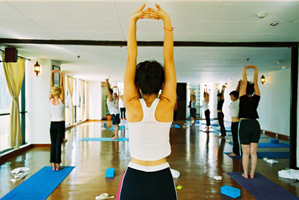
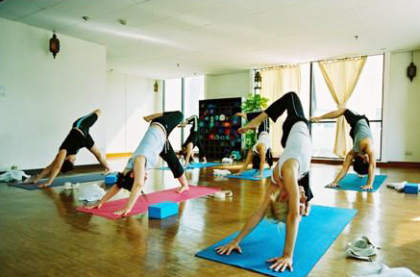
I’ve tried yoga on and off over the years back in my hometown but never really stuck to a yoga class for too long… the last couple of years I mainly followed a Rodney Yee yoga dvd once a week every week to subsidise my other exercise regimes. When I moved to Bangkok, I found Yoga Elements on google – apparently they are rated as the 11th best yoga studio in the world! And as you pay for a set amount of yoga classes per month, it seems you’re much more likely to improve and take part in it a little more seriously and regularly.

About Yoga Elements Bangkok

Yoga Elements is situated in Bangkok, just a 5 minute walk from BTS Chitlom in the Vanissa building just down the road from Central Chitlom shopping mall. The studio itself is very impressive – it’s clean, nicely decorated with amazing views over the city of Bangkok from the actual yoga studio itself – which is definitely a cool environment to do exercise. You are provided with towels and a locker with free use of the showers too which really comes in handy if you want to do some exercise before work or uni etc.


Yoga Elements Review

As for the actual yoga classes, I found them to be a little hit and miss. I found some of the yoga classes to be a little too focused on breathing and relaxation – not particularly much of a workout. Now, I know breath and relaxation are fundamental to yoga but in all honesty, I’m much more interested in the physical side of it, so the classes at Yoga Elements Bangkok just didn’t keep my motivation up.

Cerissa’s classes were very good, and if she taught more lessons there I would have definitely considered sticking with Yoga Elements… I ached the next day after her yoga classes. Don’t get me wrong though, I don’t rate Yoga Elements badly, as I think it is more to do with my own taste that I did not gel with it… but I would recommend that you try elsewhere if you’re just after a more rigorous workout. If you are serious about yoga or the more spiritual side of it, then this Bangkok yoga studio will likely be most awesome for you!

You can purchase your first month of 15 x 90 minute yoga lessons for just 2000 baht which is the cheapest yoga studio in Bangkok I have found so far. You don’t need to book either, just drop in to one of the beginner ‘Elements’ yoga classes 15 minutes before the start – you can check out their website or Facebook page for a schedule or take a look at my guide on yoga in Bangkok.


Where can I buy a yoga mat in Bangkok?

You can pick up a cheap yoga mat in Bangkok for about 300 or 400 baht from most Watsons pharmacies –usually in a container near the till. Otherwise Sports World on Silom Road just off the Saladaeng BTS has a selection of yoga mats between 300 and 1500 baht. For a better quality yoga mat in Bangkok, try Siam Paragon sports section on level 2 – the ones for 960 baht are much better quality and less slippy than the cheaper yoga mats mentioned above… although you can buy budget yoga mats here too.


Shopping Guide: Prices In Thailand

thailand price guide shopping tips

Thailand Shopping Price Guide

Haggling and bargaining for prices in Thailand is standard shopping practice but it’s not always so easy for a foreigner shopping in Thai markets when, for example, you don’t know how much clothing typically costs; Not to mention when you are buying something in an foreign currency as well. Some of the street vendors in Thailand can be… a little untrustworthy and sneaky when it comes to giving prices to a ‘farang’…

They may well act charming and generous, offering you discount and ‘special prices’, but in reality some of them will take advantage and you may well end up paying as much as five times the actual price. So for anybody new to shopping in Thailand, wondering how the hell much stuff is supposed to cost and worrying if they’re being scammed or not… here is a rough Thailand shopping price guide for you!

Please note that these prices are rough… they are merely the cheapest prices I have found so far in Thailand and individual products may differ in quality and value:

Average prices in Thailand

Small pineapple or melon chopped fruit bag       10 baht
Whole dragon fruit chopped                              15 baht
Corn on the cob                                              15 baht
Pack of 5 pomelo segments                             20 baht
Large rose apple or pineapple fruit bag              20 baht
Small bottle of pomegranate juice                     40 baht

Ipod cover                                                      100 baht
Knockoff Beats By Dr Dre earbuds                    80 baht
Knockoff Beats By Dr Dre Headpones (Medium)150 baht
Knockoff Beats By Dr Dre Headpones (Large)    300 baht
Fake Samsung Galaxy S3                               3500 baht
Large suitcase                                                1500 baht
Fake knockoff sunglasses – Rayban, Oakley    100 baht

Standard T-shirt                                              200 baht
Fake knockoff SuperDry T-shirt                        350 baht
Ladies Denim Jacket                                       390 baht
Ladies Jeans Shorts/ Hotpants                         80 baht
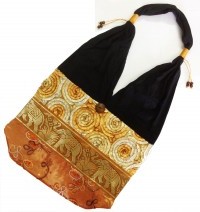
Embroidered Handbag                                     100 baht


Thin (faux) Leather Belt                     50 baht
Chunky Leather Belt                         150 baht
Sarong or pashmina                          50 – 199 baht
Crochet Cropped Cardigan (bolero)     250 baht
Ladies Vest                                      35 baht
Plain Leggings                                  100 – 150 baht
Flip Flops                                          From 40 baht
Fake Havaiana Flip Flops                  150 baht
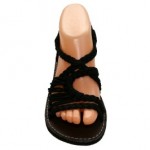
Ladies Rope Thonged Sandals           250 baht


Thailand shopping tip:

Never pay more than 300 baht for a low quality pair of shoes in Thailand. If the price is more than 500 baht, then they should be decent quality shoes… even some of the fancier malls in Thailand price some good shoes from 390 baht – so bare this in mind. And for a price of more than 800 baht, you can some very nice quality shoes. I will add more when I can, but anybody: please feel free to contribute more Thailand prices (or correct)!

Applying for a Non-Immigrant Thai Visa from Kuala Lumpur Embassy

kuala lumpur thai embassy

How much does a Thai Visa application Run to Kuala Lumpur Cost?

A three day Thai visa trip to Kuala Lumpur on a budget – 8000 baht. Easy.

If you fancy seeing a little bit of Malaysia while doing your Thai Visa application, you can do so relatively cheaply and easily. You can get two trains from Hua Lamphong station to Kuala Lumpur, first to Penang (where you can check out George Town for some sightseeing) or Butterworth, then changing over to Kuala Lumpur. This does, however, take about two days of travelling time I believe, and costs not much less than a cheap flight. If you are flexible with dates, you can get a return flight to Kuala Lumpur from Bangkok for about 5000 baht – not too bad.

From the airport, you can catch the KLIA train to the centre of Kuala Lumpur for 35 RM (£7) and find a decent youth hostel for 35 RM (£7) per night – Explorers Guesthouse is a particularly good one for this price. Also, food is cheap in Kuala Lumpur – you can get a meal from 4 RM and catch the metro from just 1 RM. So you can get by on a small amount of pocket money if you’re on a budget.

mala

How to apply for your Non-Immigrant Thai Visa and what to expect

It’s important to make sure that your stay in Kuala Lumpur is no shorter than two working days. You will need to make sure you bring a photocopy of your passport, 2 x recent passport photos, 220 RM fee and all the necessary documentation. Then get to the Thai embassy in the Ampang area for 9.15am (as it gets busy). There is a metro station (Ampang Park) very close by.

Once you’ve filled out the visa form and got your receipt, you can spend the day sight seeing! Yay! But… there is not that much in the actual city to do or see in my opinion so you do not need more than a few days in Kuala Lumpur for sightseeing… unless you have the cash to go on some excursions out of the city.

You won’t be able to collect your passport and visa until 2.30pm the next working day. I’ve seen people at the embassy completely screwed because they were expecting it all to be done on the day… so they booked the flight the same day and everything 🙁

You can only get a single entry visa from Kuala Lumpur, but as a single entry visa is considerably cheaper than a multiple one, I personally think it’s much better to apply for one of these anyway. If you ever need to leave the country or go on a holiday, you can simply apply for Re-entry at an embassy in Thailand for a small fee.

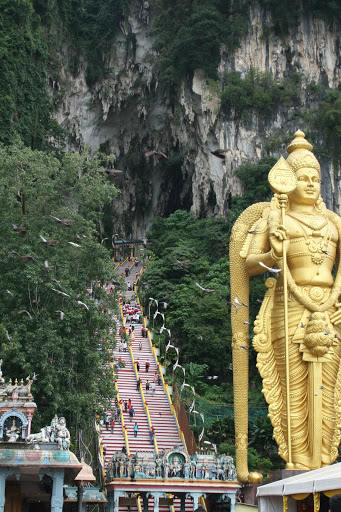
Batu Caves In Kuala Lumpur


Thailand Visa

thai visa simple guide

Which Visa Do I Need To Live In Thailand?

Unless you’re fortunate enough to already have any special plans, for example a job in Thailand or a Thai wife, then before you leave for Thailand, you will most likely need to apply in advance for a tourist Thailand visa. Usually, if vacationing to Thailand then there is no need to worry about visas before leaving… a 30 day tourist stamp can be obtained on arrival in Thailand under these circumstances. However, if you are moving there for the unforeseeable future, then it is quite likely you will be entering Thailand on a one-way ticket and this can cause problems at immigration – or more so with the airlines anyway.

See, officially, if you do not have a Thailand visa beforehand, then you need proof (i.e. a return ticket or train ticket) that you will be departing Thailand. Therefore if you are planning on moving to Thailand, it is advisable to apply for a visa at least a month before leaving just to be safe. The easiest visa to apply for is a tourist Thailand visa – available as single, double and multiple entry – it is possible to stay in Thailand for up to six months on this visa just as long as you exit and re-enter every 60 days (apparently you can even stay for a year at the discretion of the embassy you apply at – apparently the Hull consulate can arrange this for you).

However, if you are planning on changing your visa (see visas listed below) shortly after you get to Thailand, then a single entry visa will suffice. I have found the most uselful source of information for this to be the Hull consulate: 

www.thaiconsul-uk.com

Alternatively, instead of applying for the tourist Thailand visa, you can apply for the exact visa that you require before travelling to Thailand. Or, after you have obtained your tourist visa in your home country and arrived in Thailand you can then apply for one of the following visa types:


Non-Immigrant Category B Thailand Visa

  • Conducting business in Thailand as an employee of a non Thai company
  • Taking up employment in Thailand with a company located in Thailand
  • Undertaking a vocational training course (teaching, diving, boxing, etc)

Non-Immigrant Category ED Thailand Visa

  • Studying in Thailand
  • Taking part in a work study/observation tour in Thailand
  • Participating in a project or seminar in Thailand
  • Attending a business conference or trade fairin Thailand
  • Attending as an official at a recognised event in Thailand
  • Studying as a Buddhist Monk in Thailand

Non-Immigrant Category O Thailand Visa

  • Married to a Thai national
  • Visiting family working/living in Thailand
  • Volunteer work in Thailand
  • Visiting Thailand as Pensioner
  • Visiting Thailand as retired person aged 50 years and over


I don’t have a job and I don’t have a Thai wife! So which visa is best to live in Thailand for as long as possible?

Option 1: In my opinion, for those like myself, who have no particular skills to get a permitted job in Thailand, and aren’t particularly interested in teaching English, then the educational visa is probably the easiest option for staying in Thailand long-term. Also, once you have obtained the Ed Thailand visa, you don’t need to cross the border to do visa runs, which may get irritating. For this visa, you have two options – you can either apply for a tourist Thailand visa before you leave for Thailand, then find a school to join once you get there. The school will sort your paperwork out for you within a few weeks, after which you will need to leave the country (just a neighbouring country such as Laos) to change your Thailand visa to Non-immigrant ED at a Thai embassy.

Alternatively, you can join a school online from your home country before travelling to Thailand; they will post you the necessary paperwork within about a month and sort everything out for you so you won’t need to leave Thailand once you get there. Basically you have to apply for an ED visa outside of Thailand – whether it’s your home country or crossing into a neighbouring country.

If the ED Thailand visa issued is multiple entry, there would be a requirement to exit and re-enter Thailand every 9o days. If the visa issued is single entry, you can stay for a year without having to do any visa runs. You can always apply for permission to leave and re-enter at the Thai Embassy for a small fee. For anybody who wishes to stay in Thailand for the long-term, most language schools will be able to allow you to study for up to 3 years on an ED Thailand visa. After living in Thailand for three years, it is possible to apply for permanent residency.

Joining a school in Thailand will generally cost between 18000 and 40000 baht for a year. The cheapest I have found so far is www.sandee.ac.th at a cost of 18000 baht.

Option 2: Can’t be bothered with all this boring Thailand visa stuff? Some people will opt to stay in Thailand illegally, without a visa. If you are caught doing this then you can be sent to prison and fined, maybe even banned from the country in extreme cases. However in many cases, as long as you hand yourself in with your passport at immigration first, you will get away with just paying a fee. The maximum that they can charge you is 20,000 baht so whenever you are ready to leave Thailand, be it maybe 2 years say, just admit your ‘Overstay’ and have the cash ready to hand over. Easy really (depending on how laid back you are), just not so good if you get caught first…

N.B. Immigration rules are constantly changing. Even though I know people who have stayed in Thailand this way, rules can always change and punishments can always become harsher!

Learn more about Thailand Visa Extensions with my guide and checklist here